Mondo
A new ecosystem that lives and radiates outward
Mondo
Gecina
Restructuring of an office and retail building
Paris, France
2024
31,000 m²
Bechu & Associés
Volume ABC
Associated interior architect: Saguez & Partners
© Nicolas Grosmond
© Fernando Javier Urquijo
The project
The context
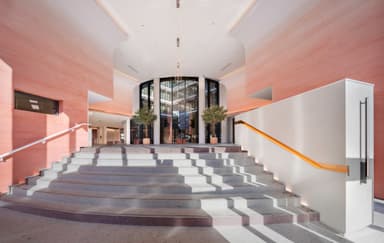
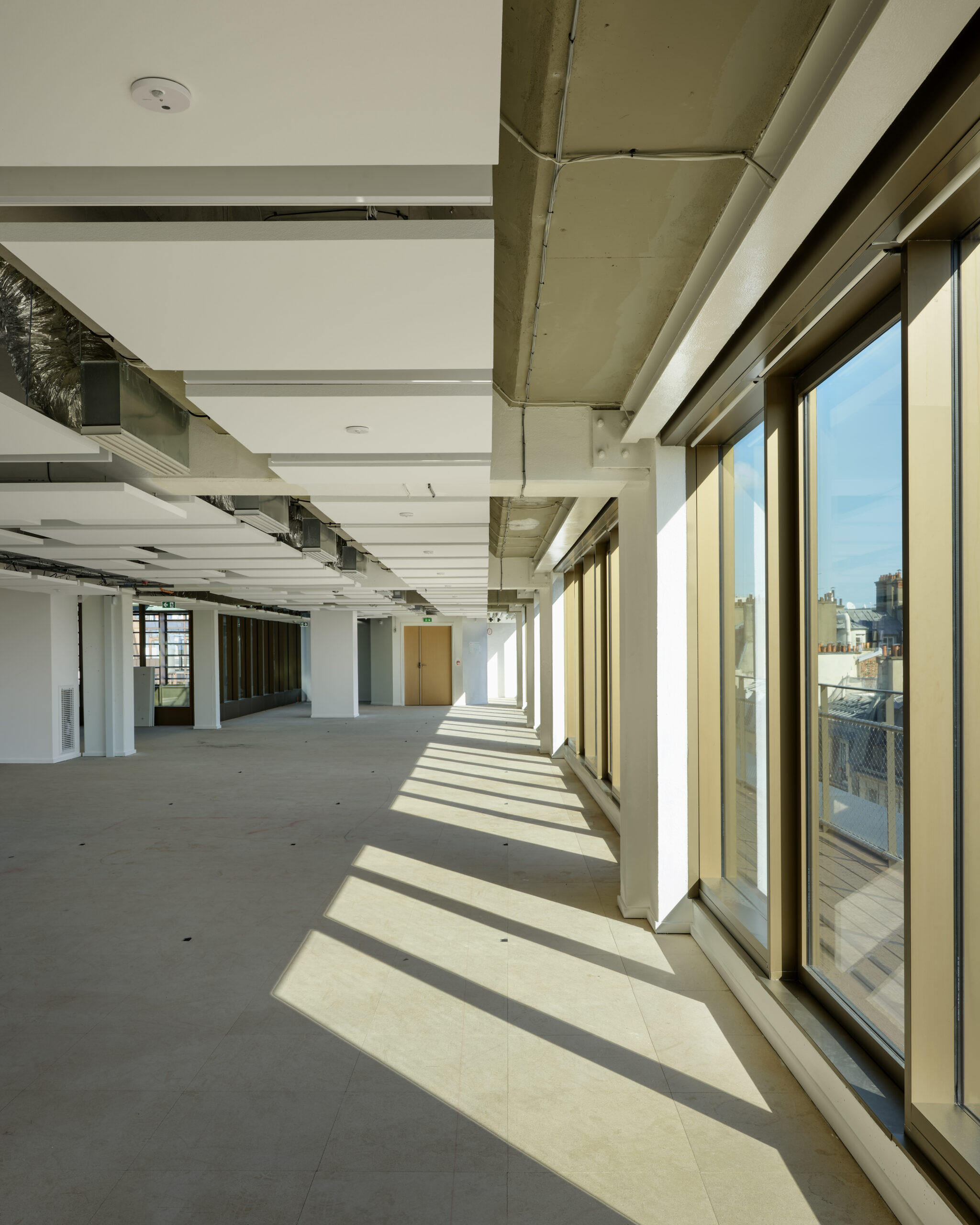
The real estate complex, the subject of this large scale rehabilitation, is currently composed of two parts: the first, called le Banville and located on rue Pierre Demours, was built in 1925 and the second, located on rue de Courcelles, in 1961. Our project consists in proposing a single office facility comprising a main lobby located on rue de Courcelles and a secondary lobby located on rue Pierre Demours, a car park, an employee restaurant, and an independent training center.
The layouts
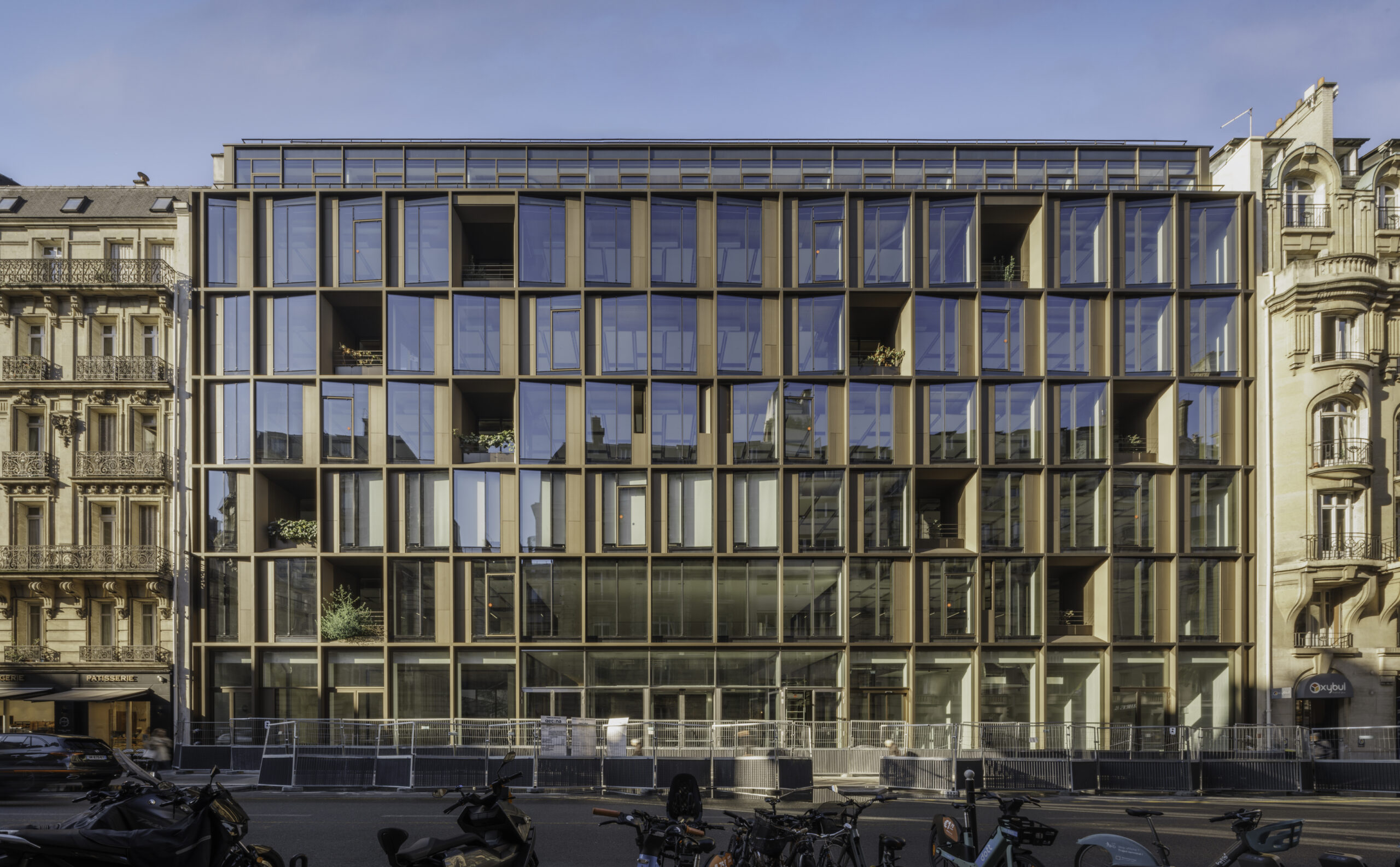
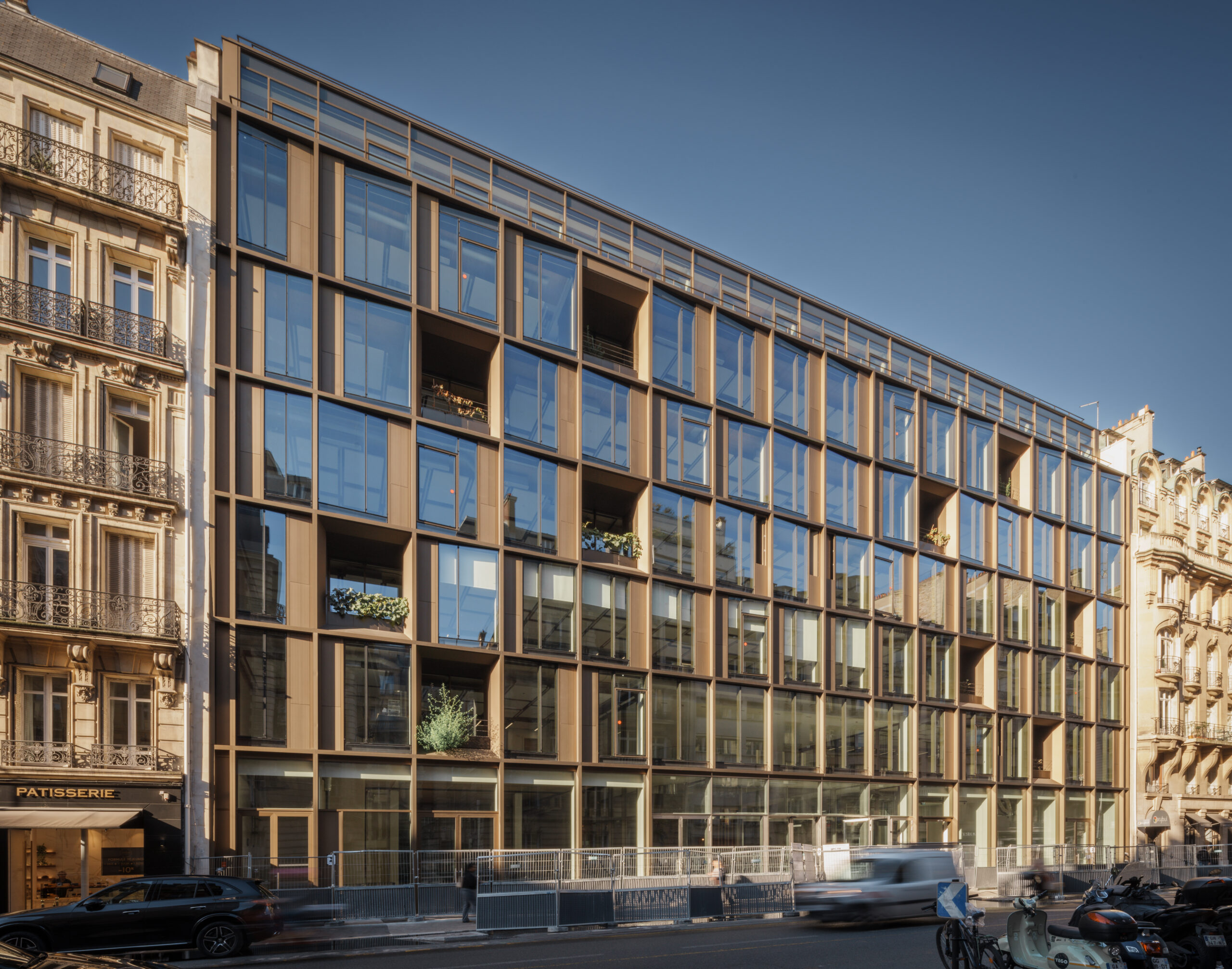
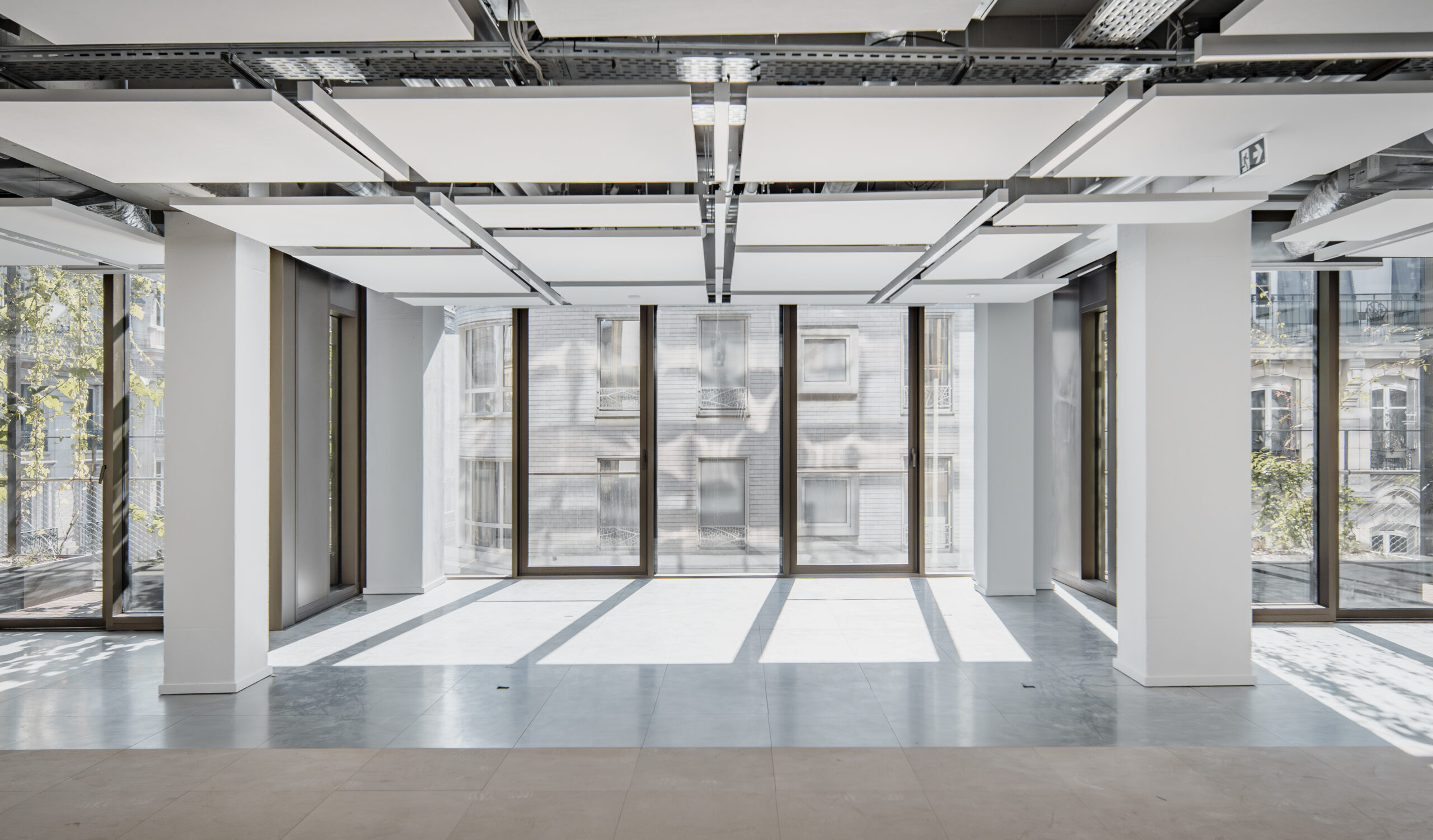
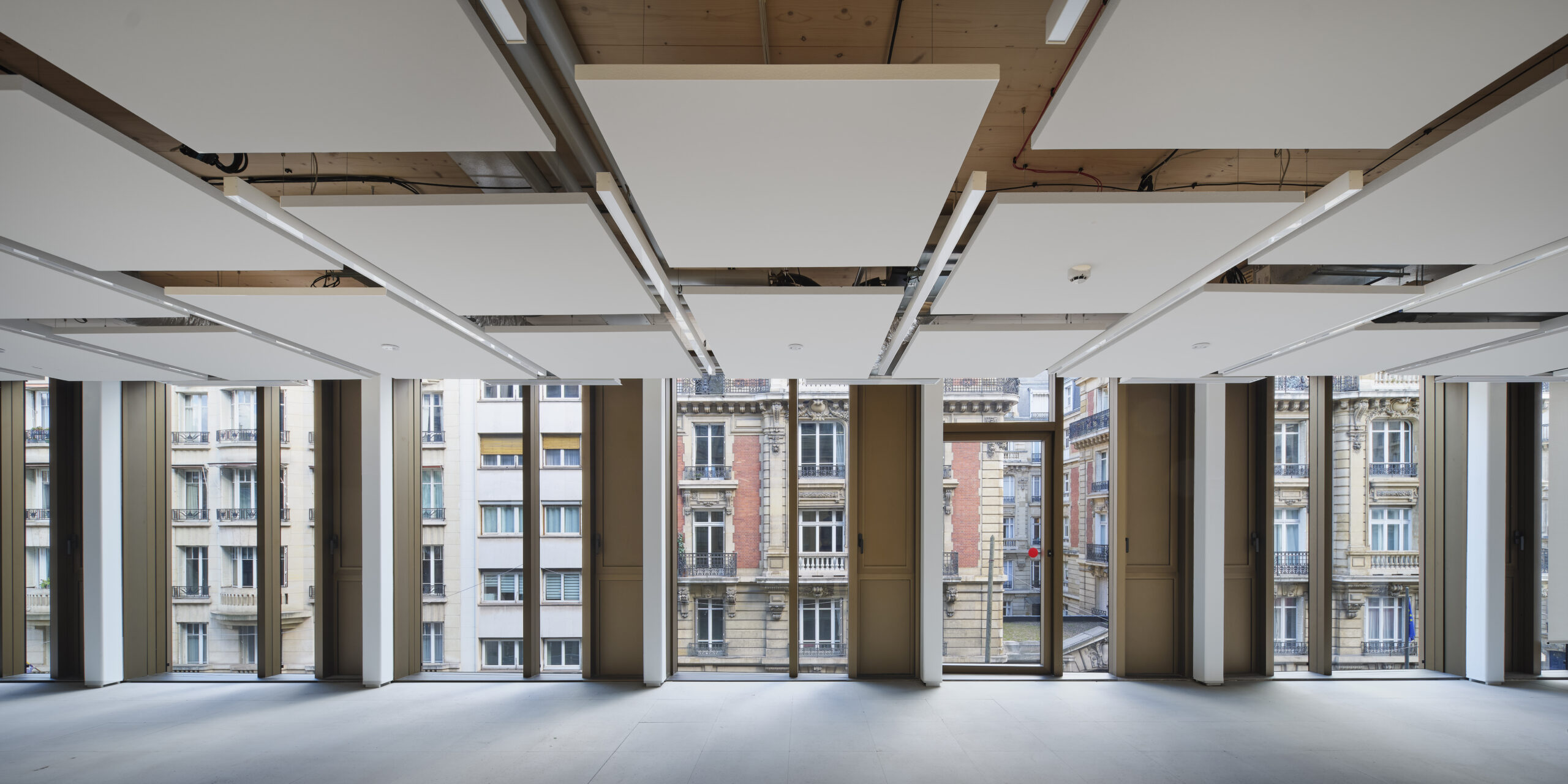
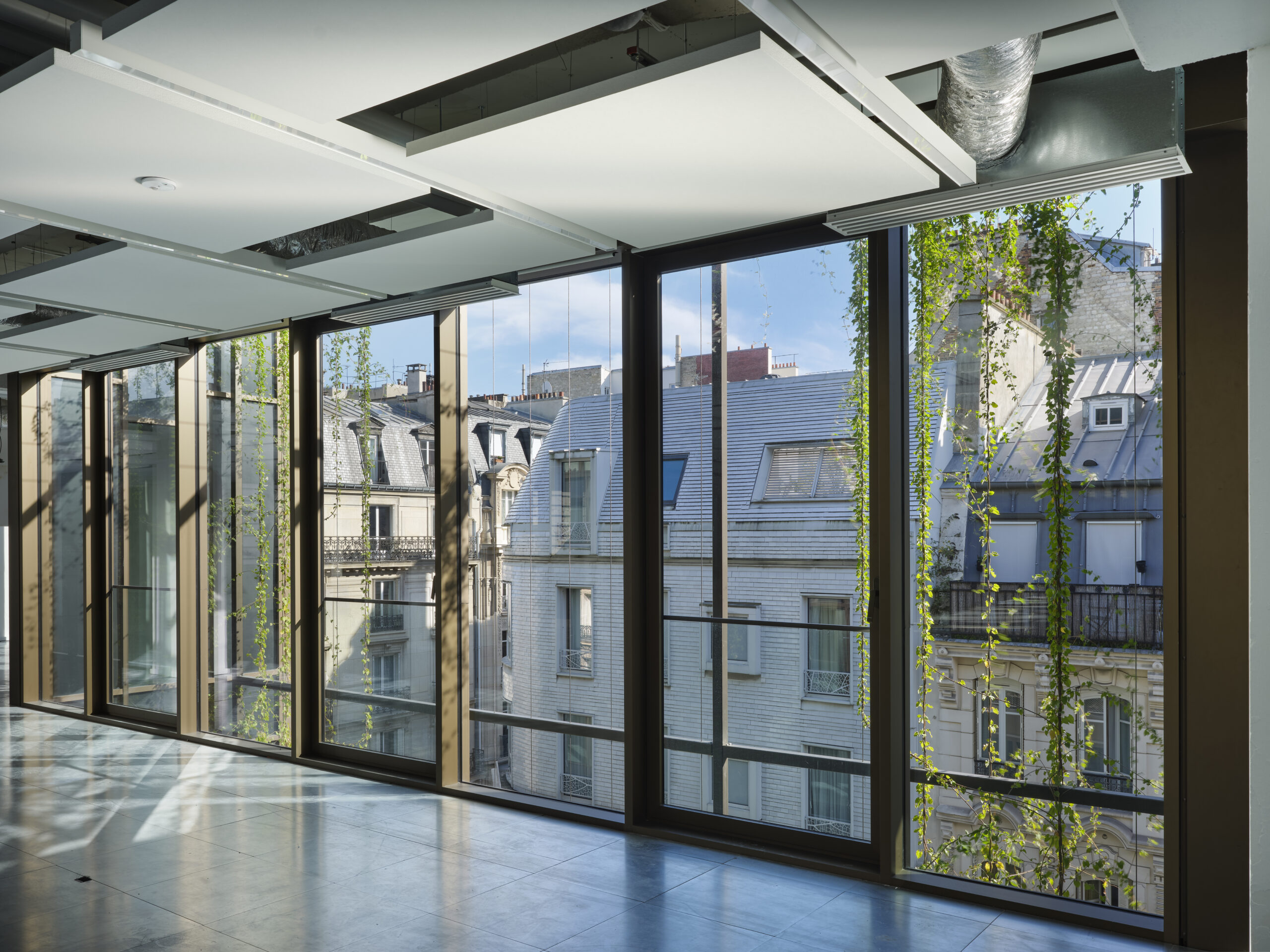
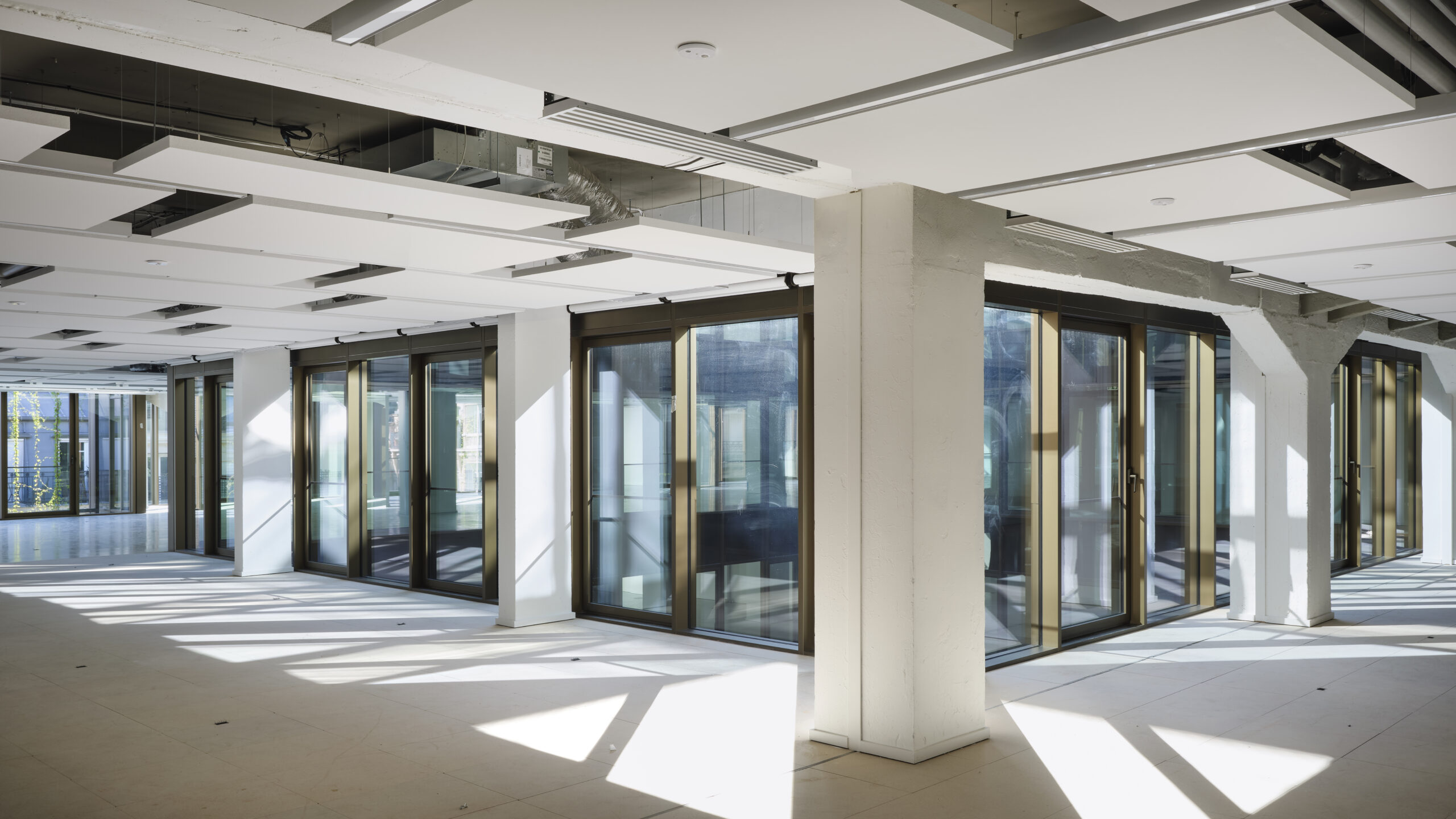
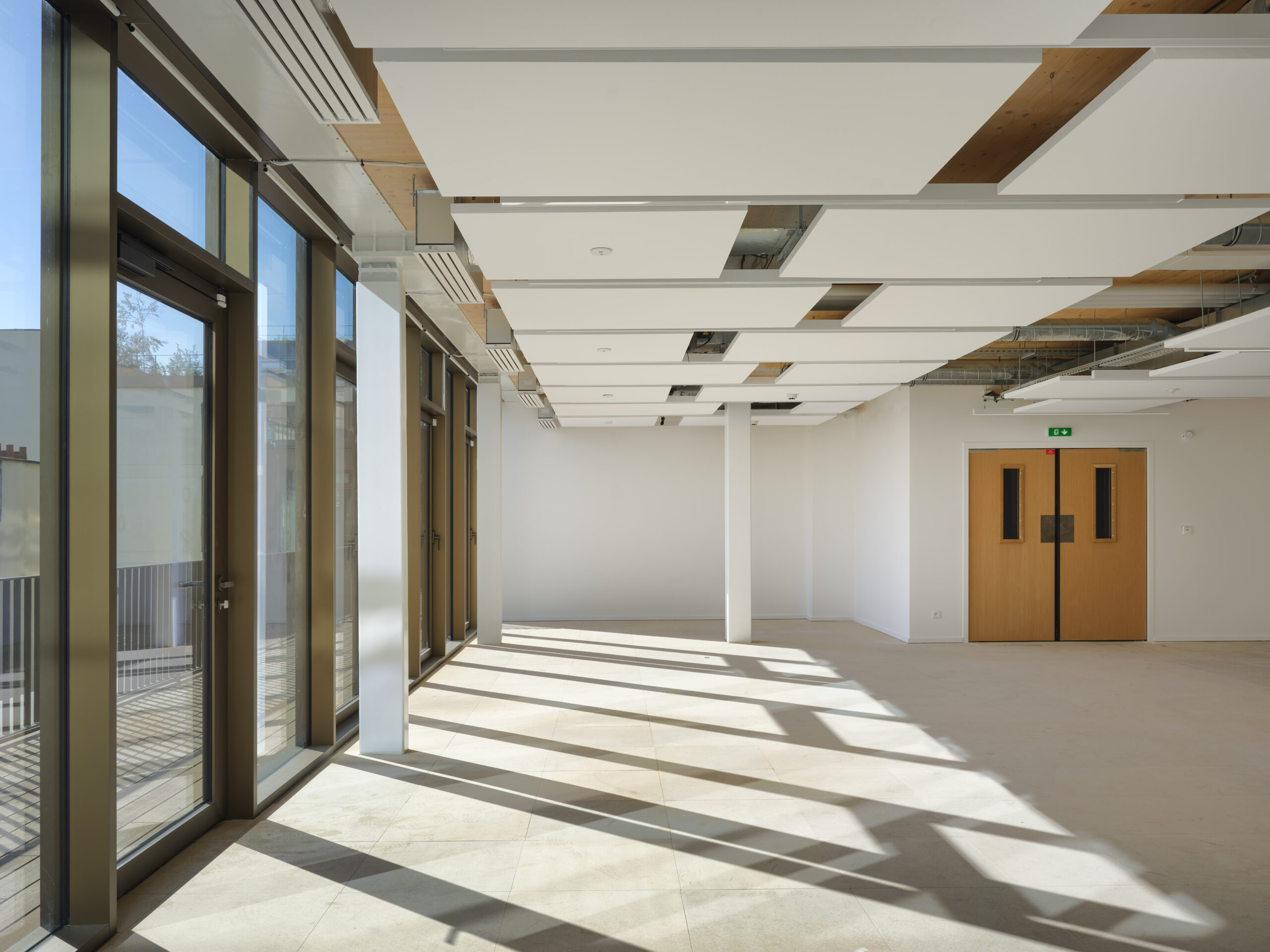
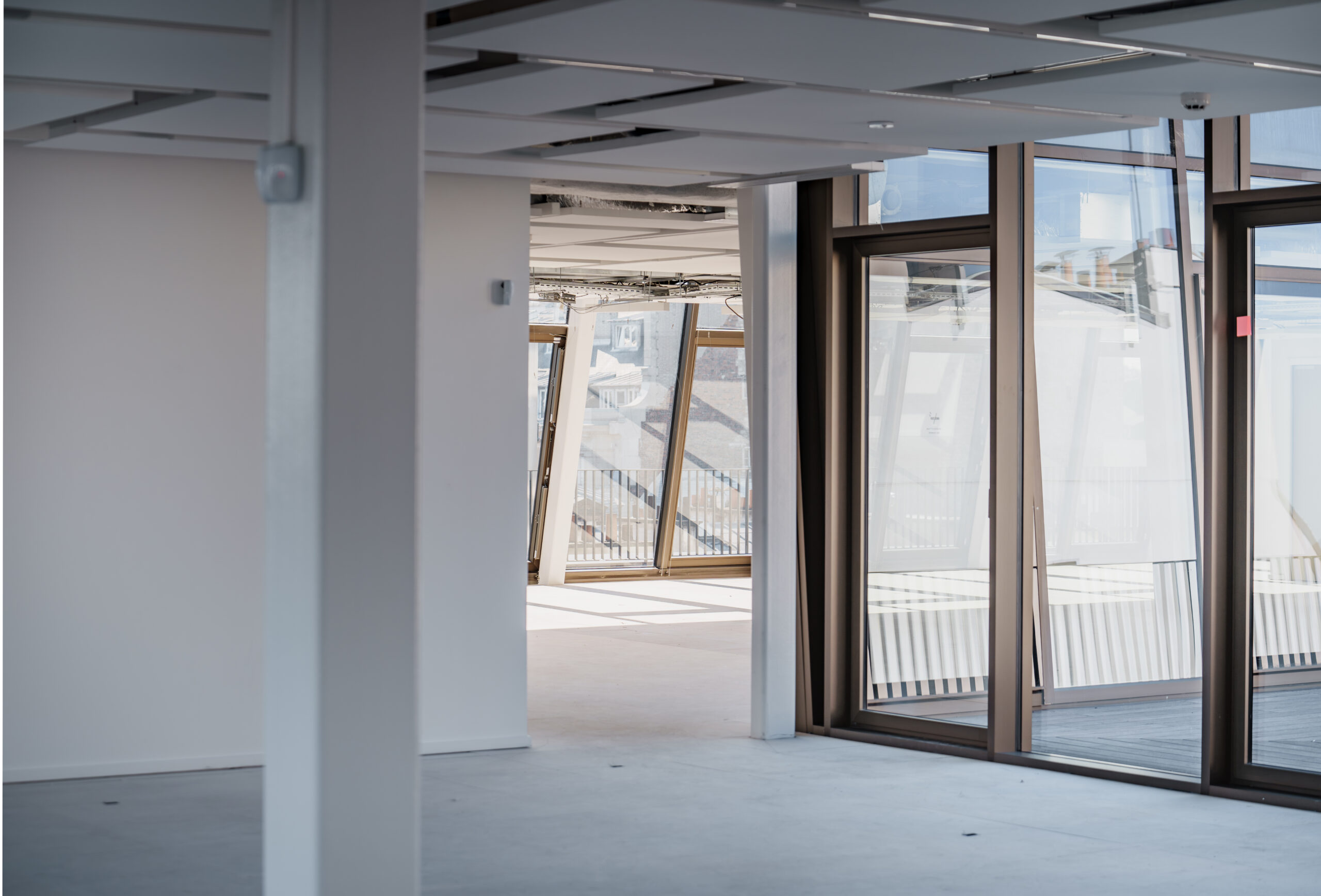
The entire project aims to transform this ageing site into a new attractive parisian address. It provides for a generous opening onto the city, extensively glazed and punctuated with planted loggias; its architectural checkerboard composition of glazed blocks offers a secondary scale more closely related to that of the human figure.
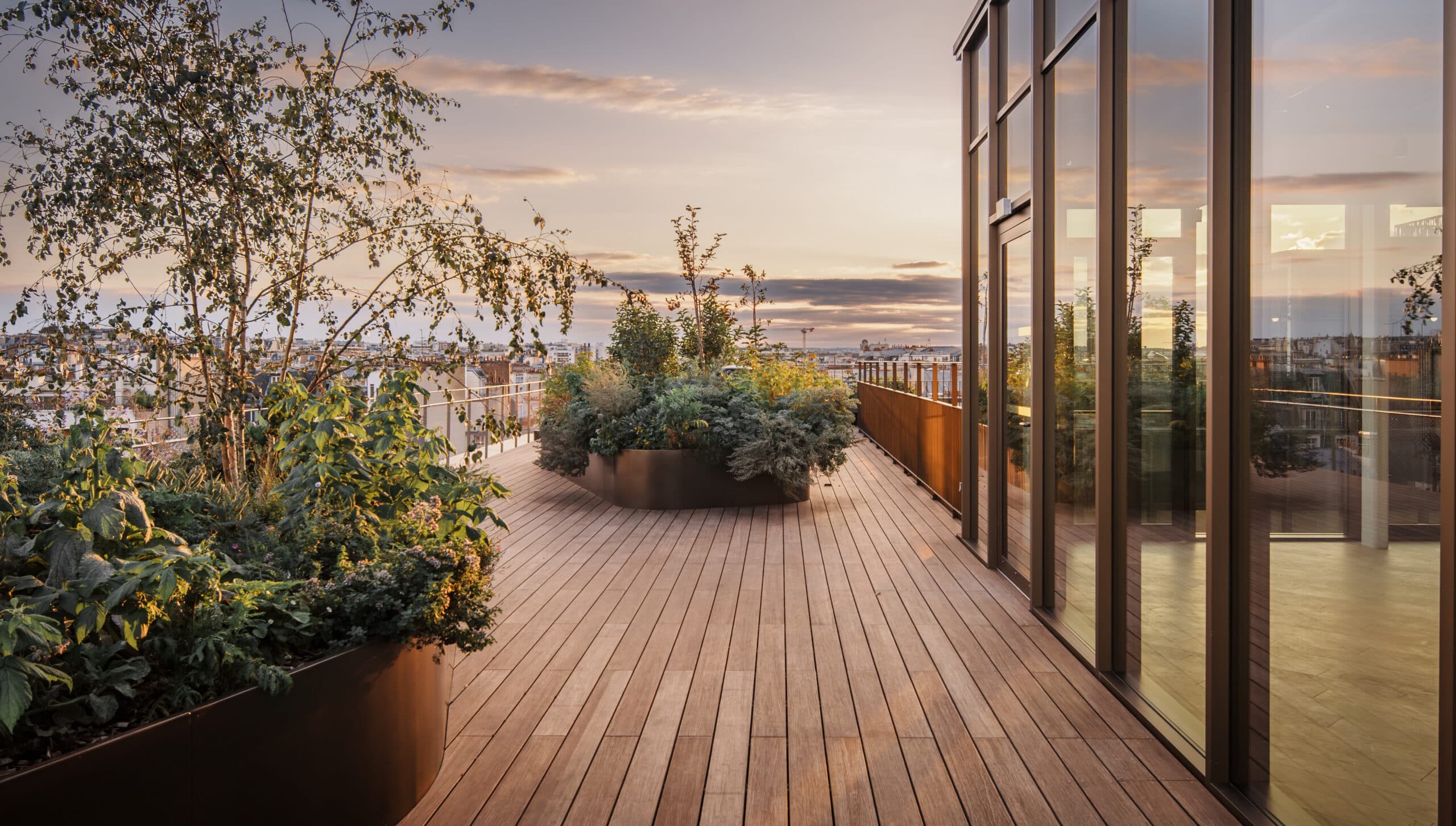
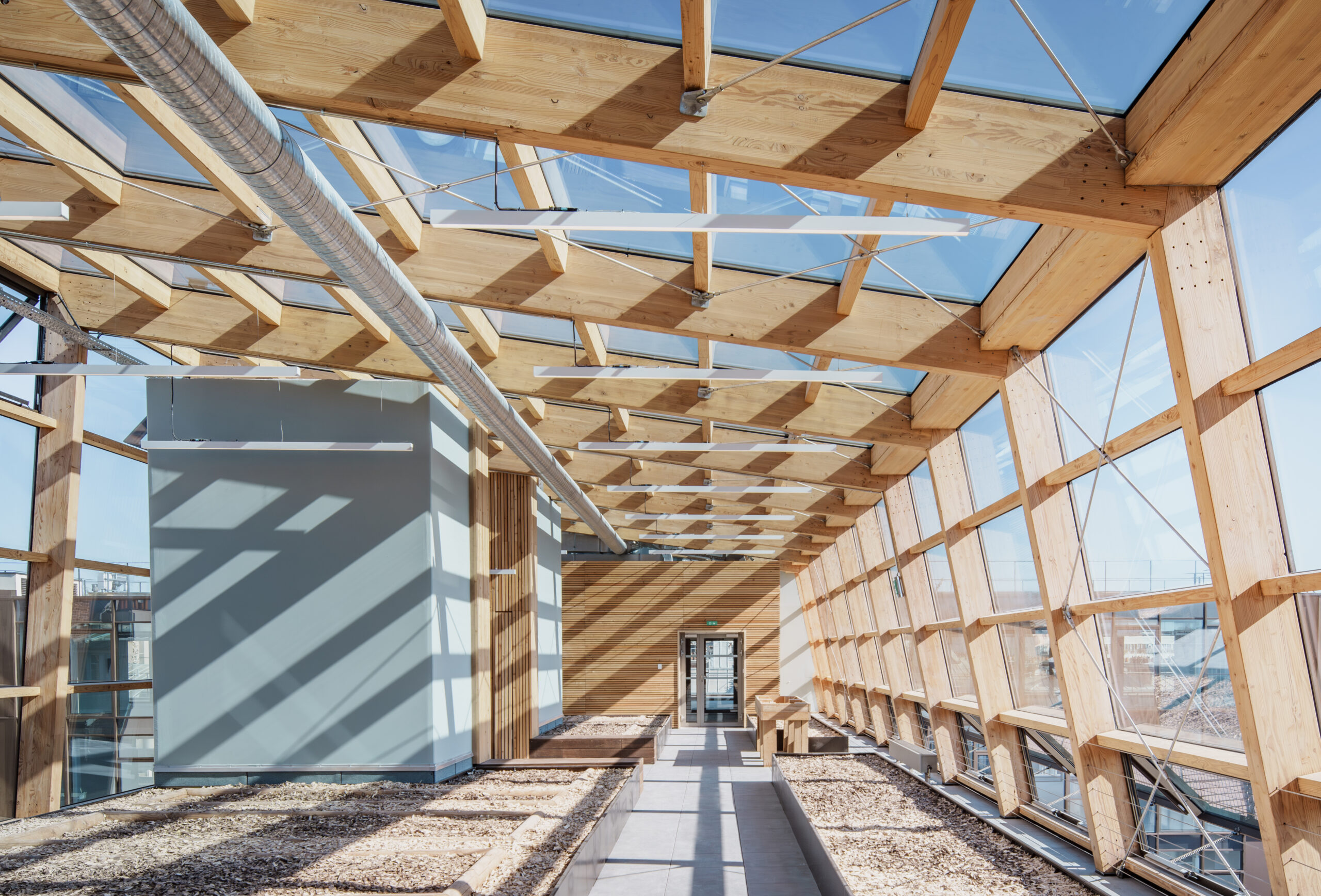
The strong presence of greenery will also be a factor of improvement compared with the neighbouring buildings (in particular on rue Pierre Demours, which is very narrow). The planted pockets will form as many cases of climbing vegetation that will create hanging gardens. The whole will target high levels of environmental performance with the following certifications: Leed Gold, HQE 2016 Excellent standard, Well Gold, Biodiversity label, Wiredscore Gold label.
Interior architecture
The Banville wing extends over 8 above ground levels and 5 basement levels, comprising 661 parking spaces and technical rooms. It develops a floor area of 22,995 m². On the Courcelles side, the office building is developed over 6 above ground levels and 1 basement level comprising 13 parking spaces and technical rooms. This wing offers a floor area of 5,112 m².
The metamorphosis
The Banville, by becoming Bancelles, will revive a prestigious address on rue de Courcelles and will contribute to the reintegration of nature into the city.
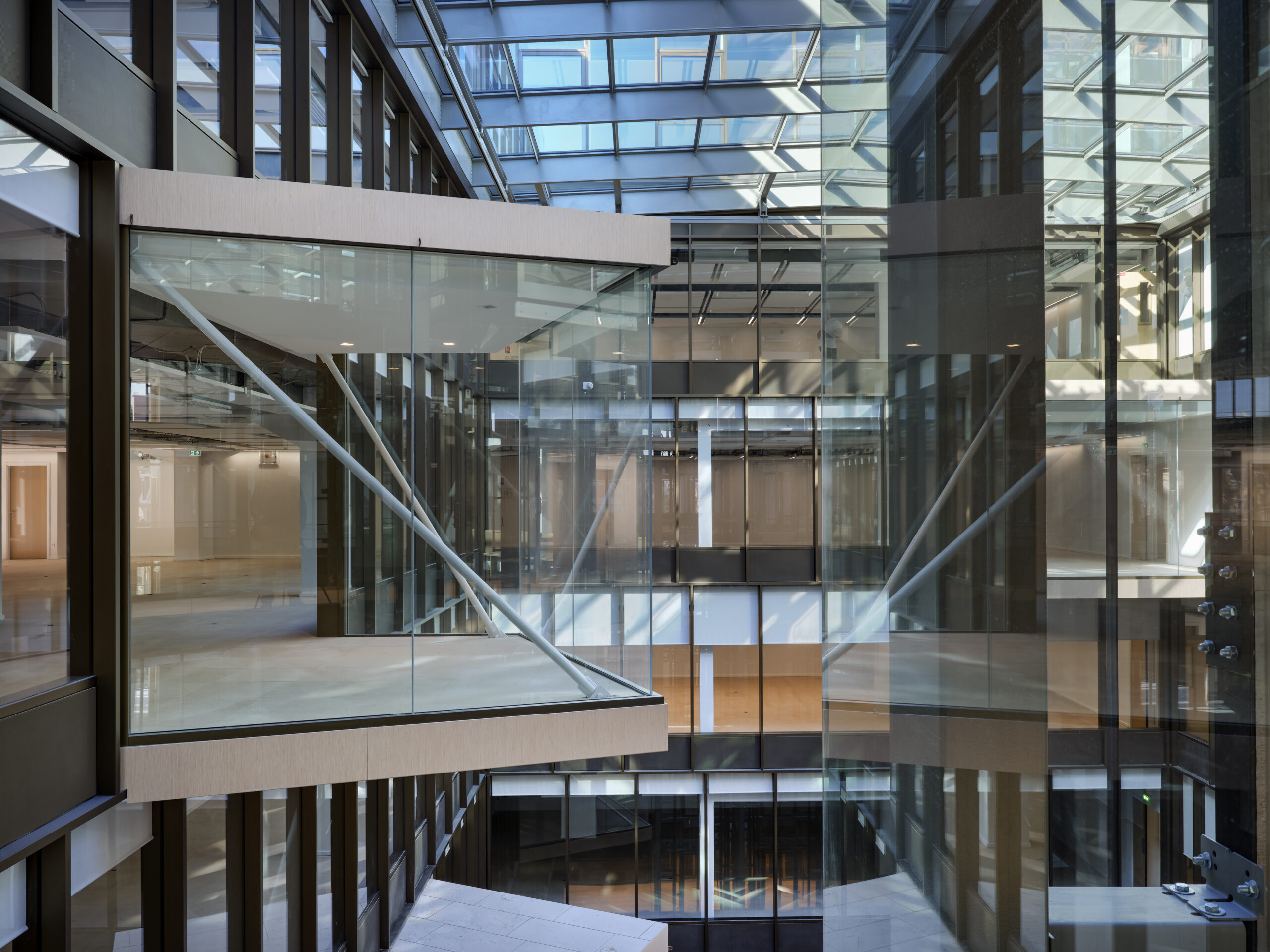
Thus, it is this nature and its ecosystem that guide our gesture, with an architectural work that is born from the interior of the building for a renaissance that will reopen it to the city, providing it with new functions, transparency and synergies. Letting light into this large complex and developing plays of transparency are therefore the fundamental challenges of this project. The current real estate complex is worn out and very heterogeneous, with used office floors of differing levels and atypical configurations. A partial demolition of the existing structure is a necessary prerequisite for its metamorphosis.
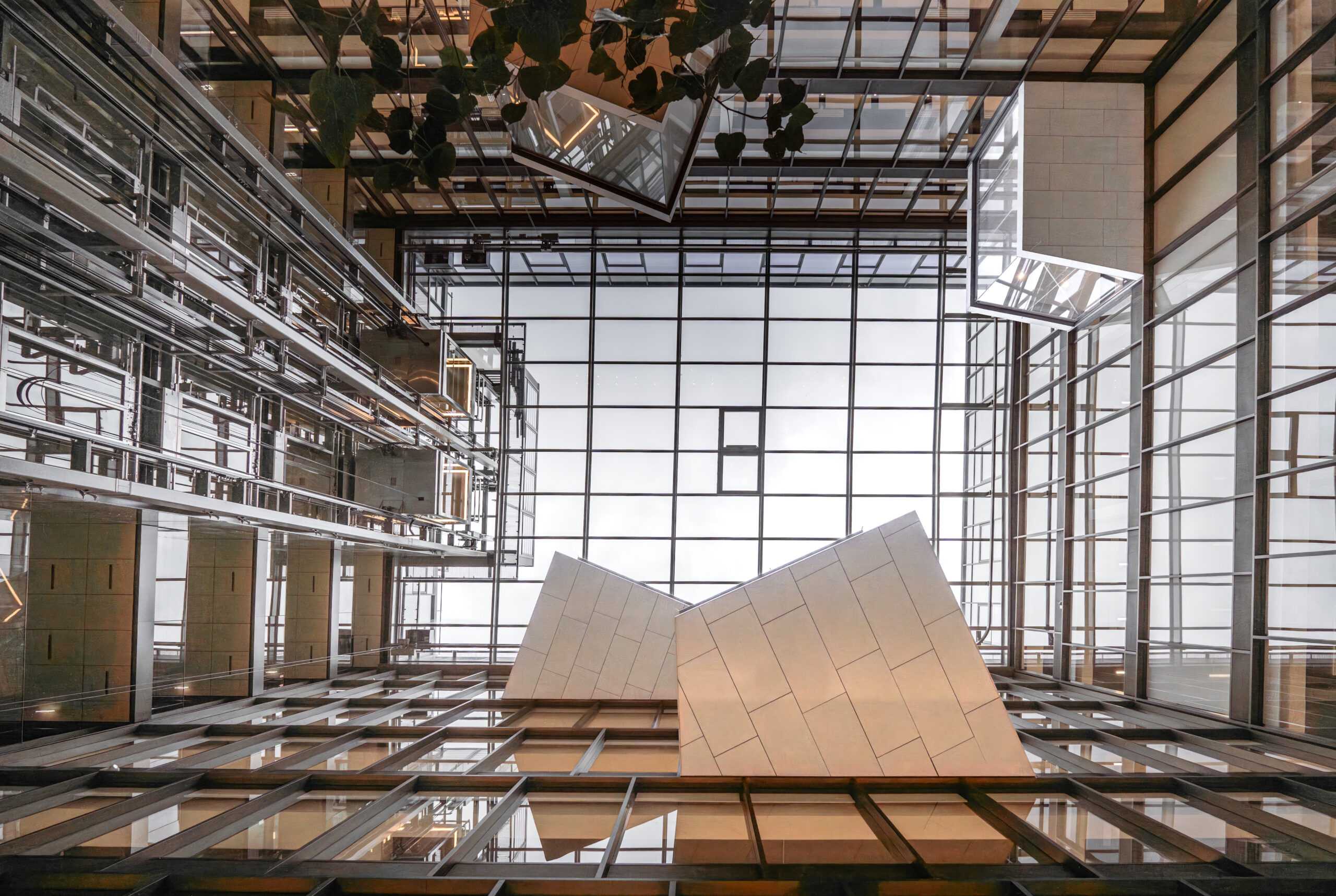
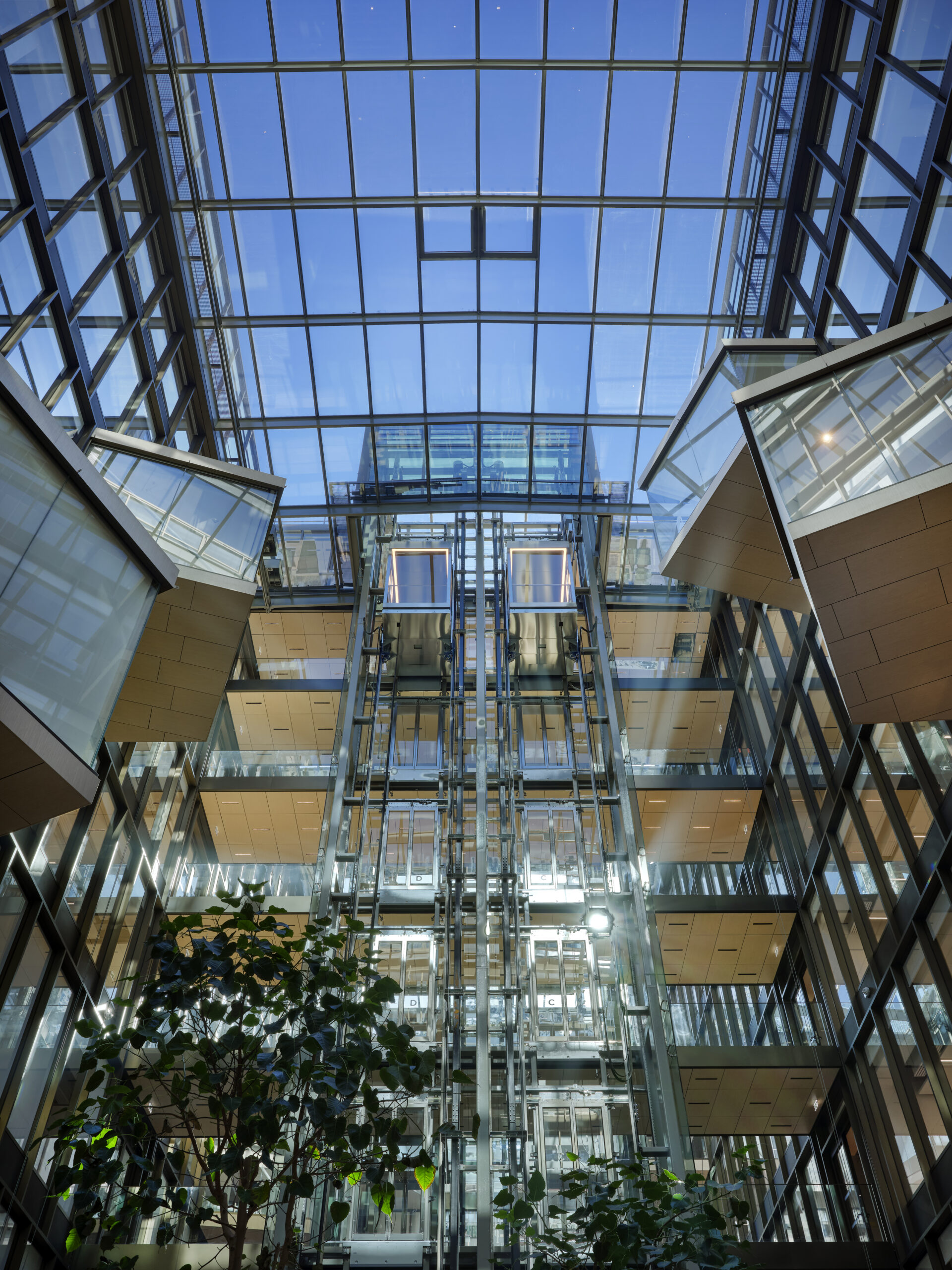
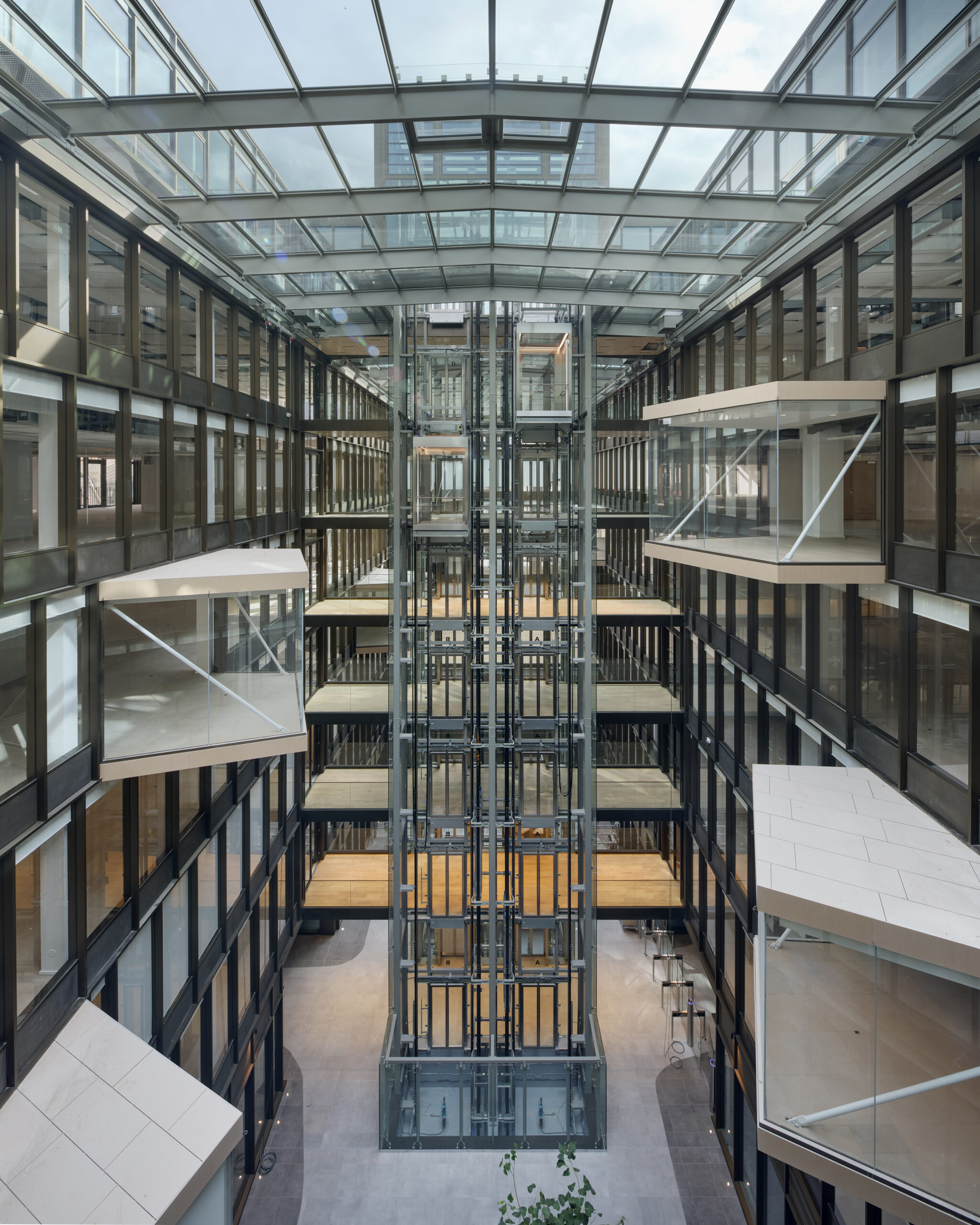
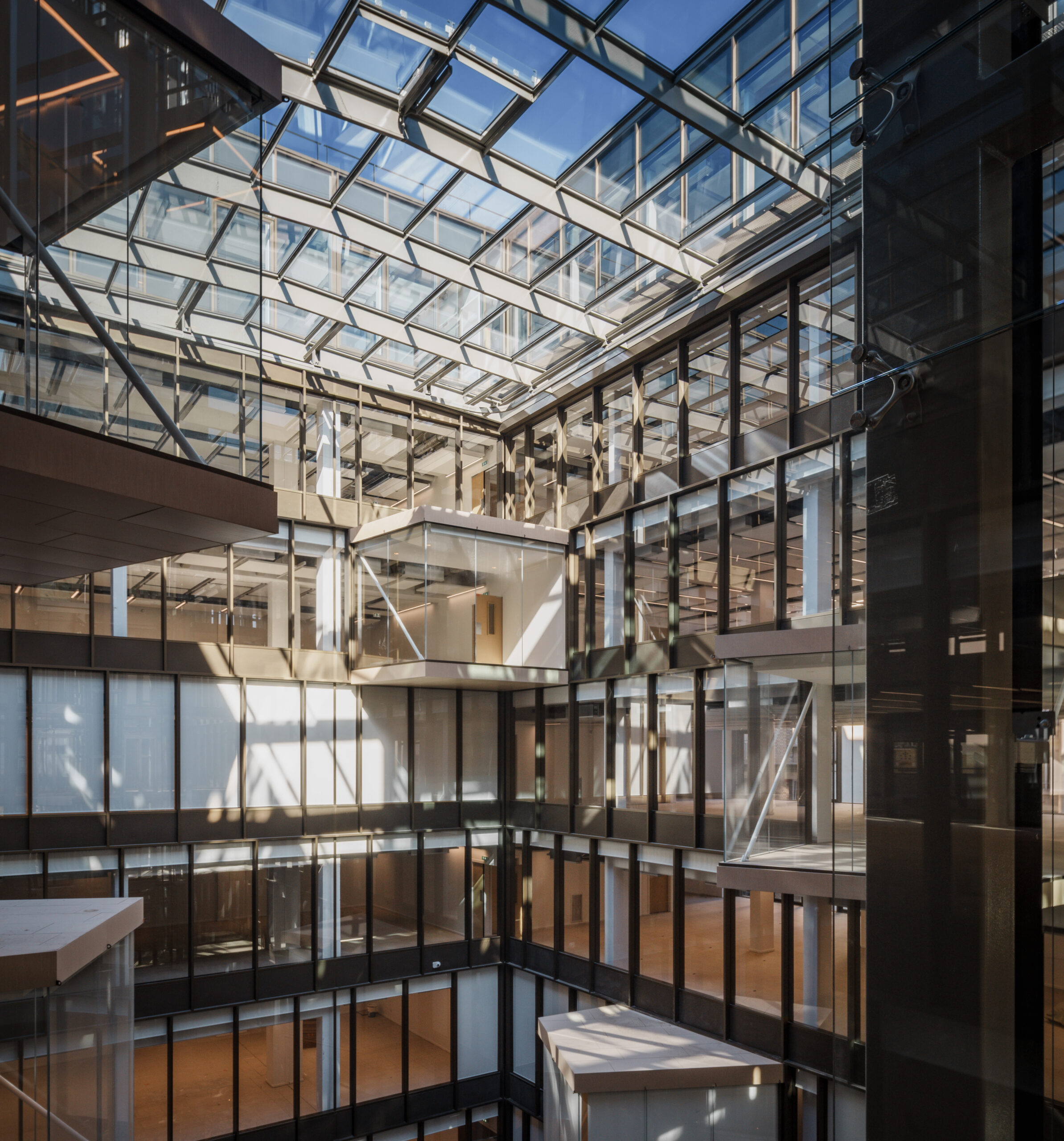
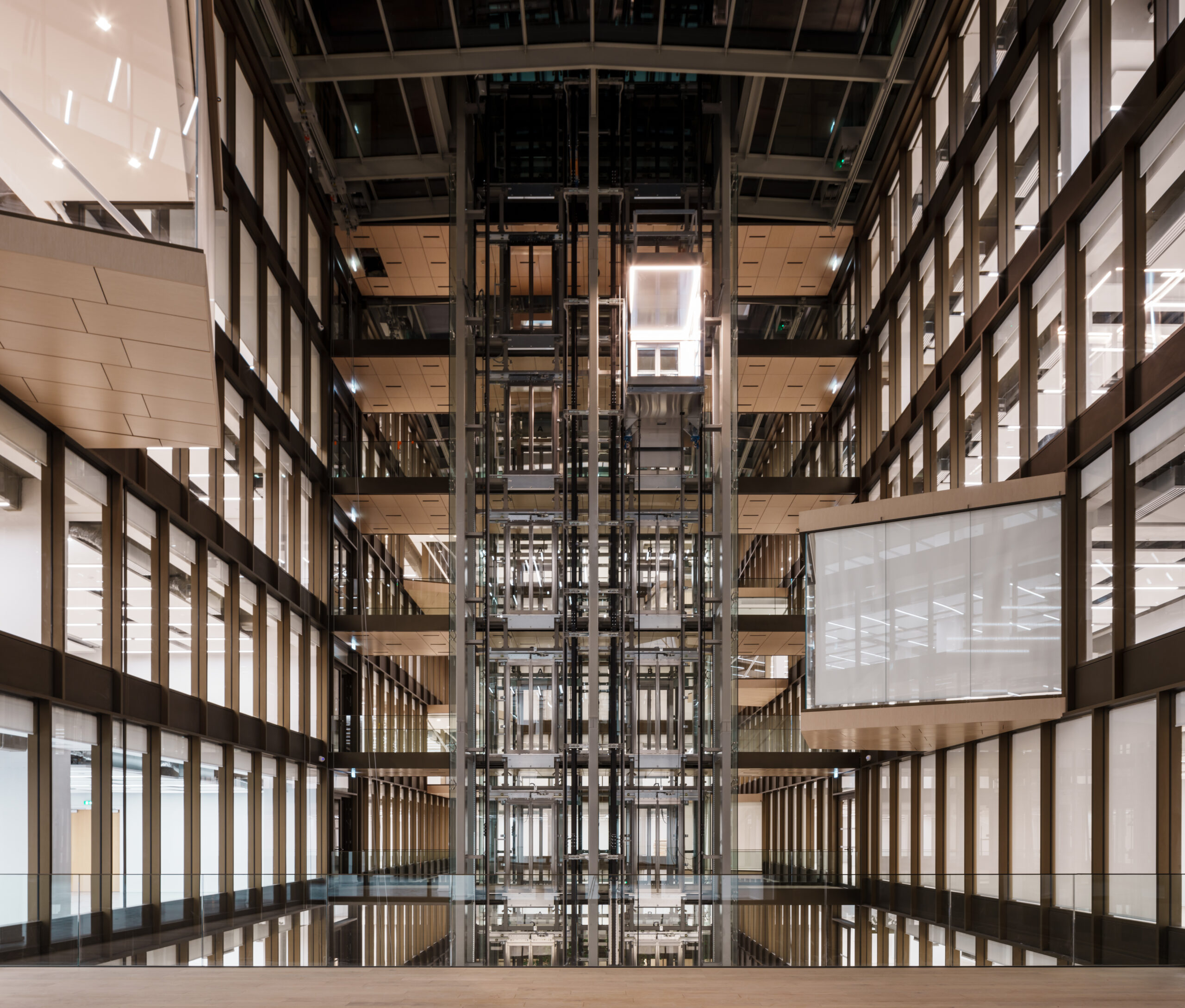
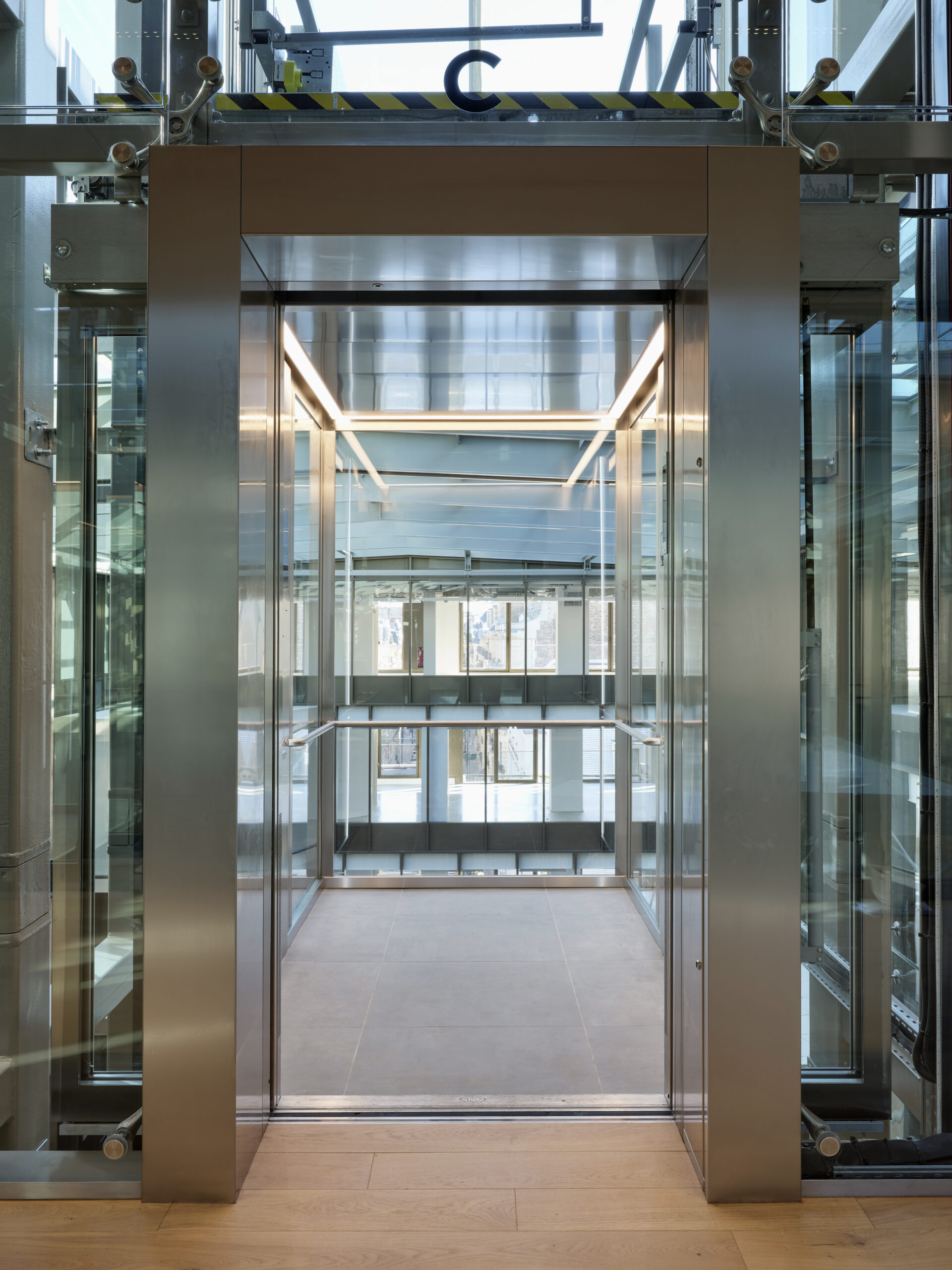
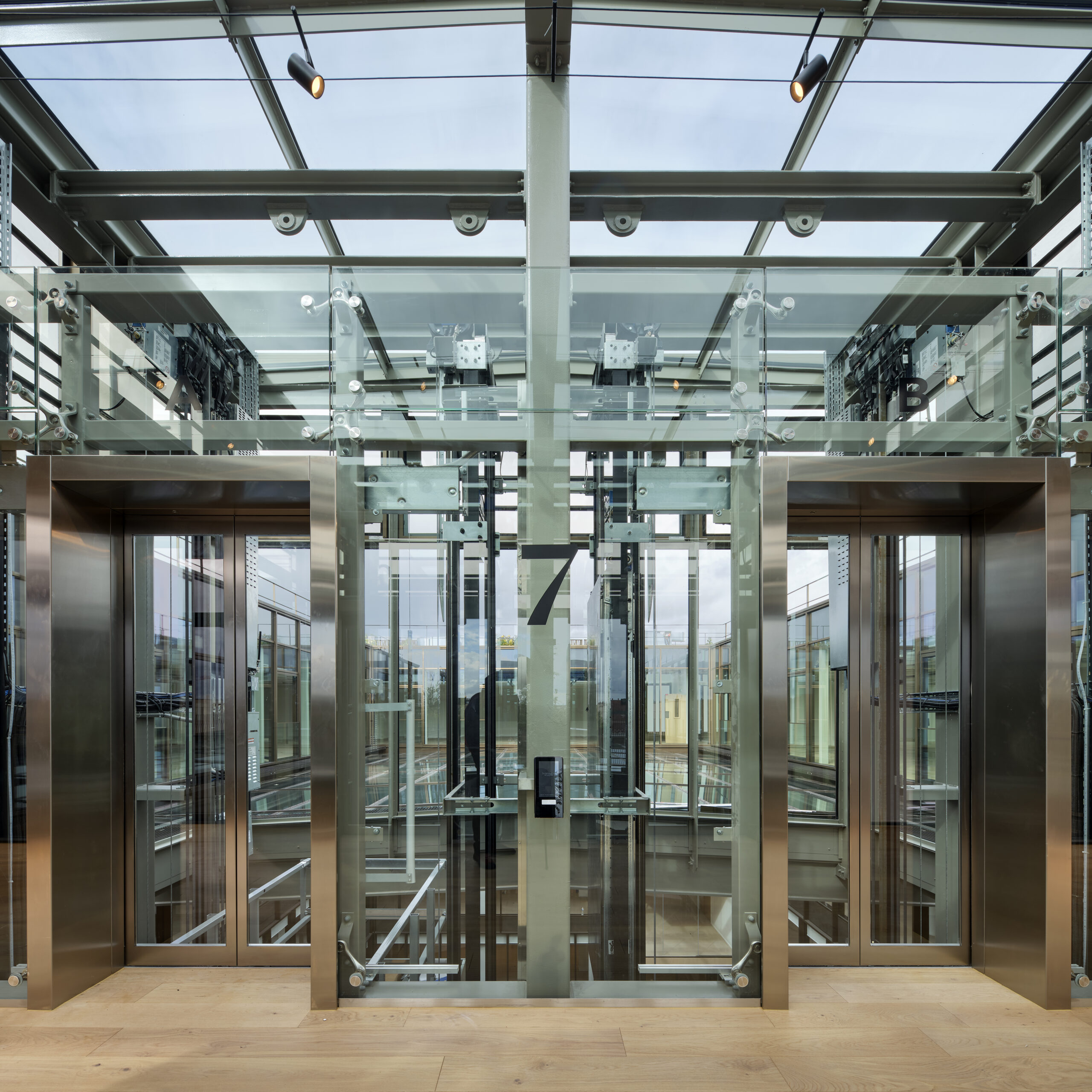
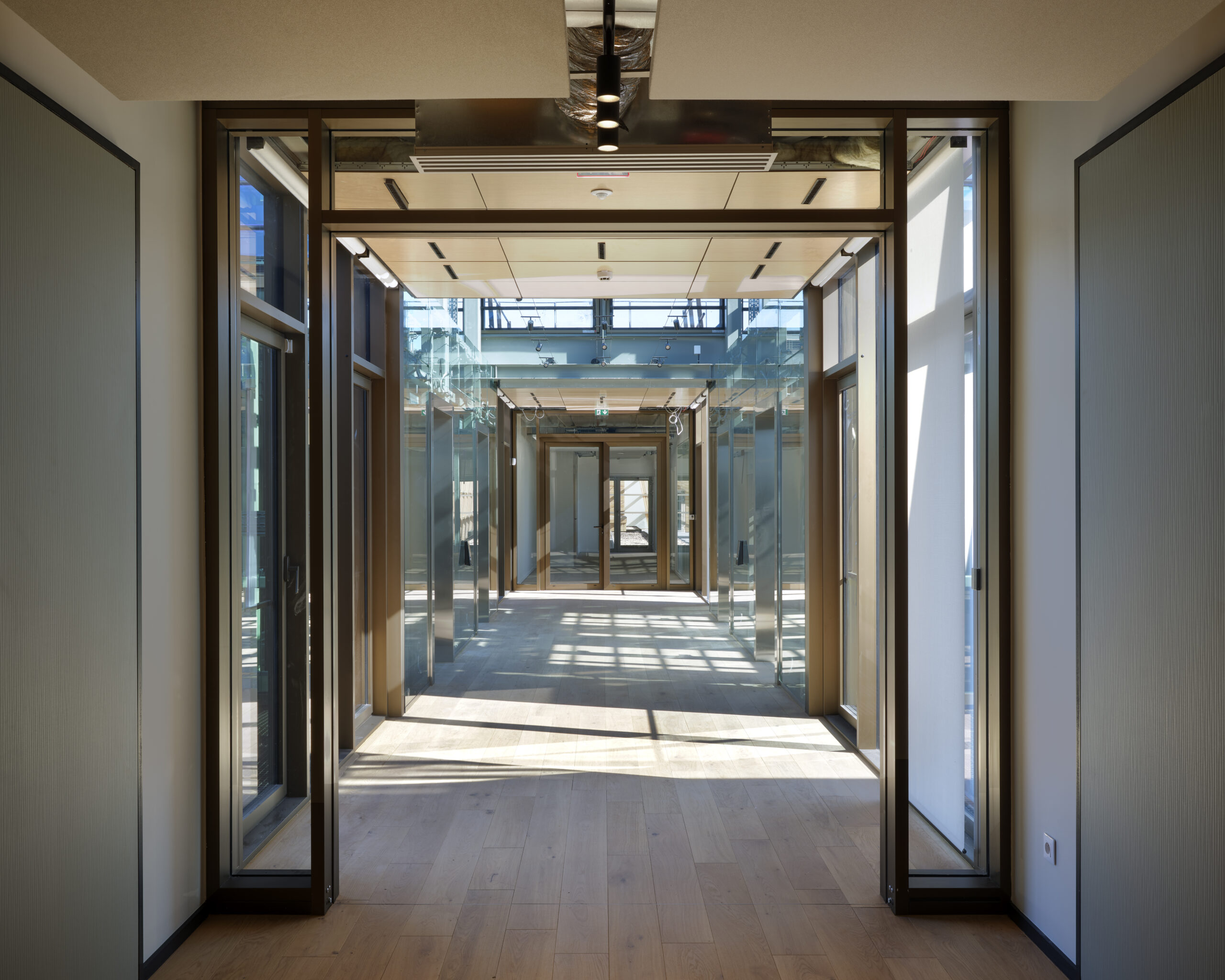
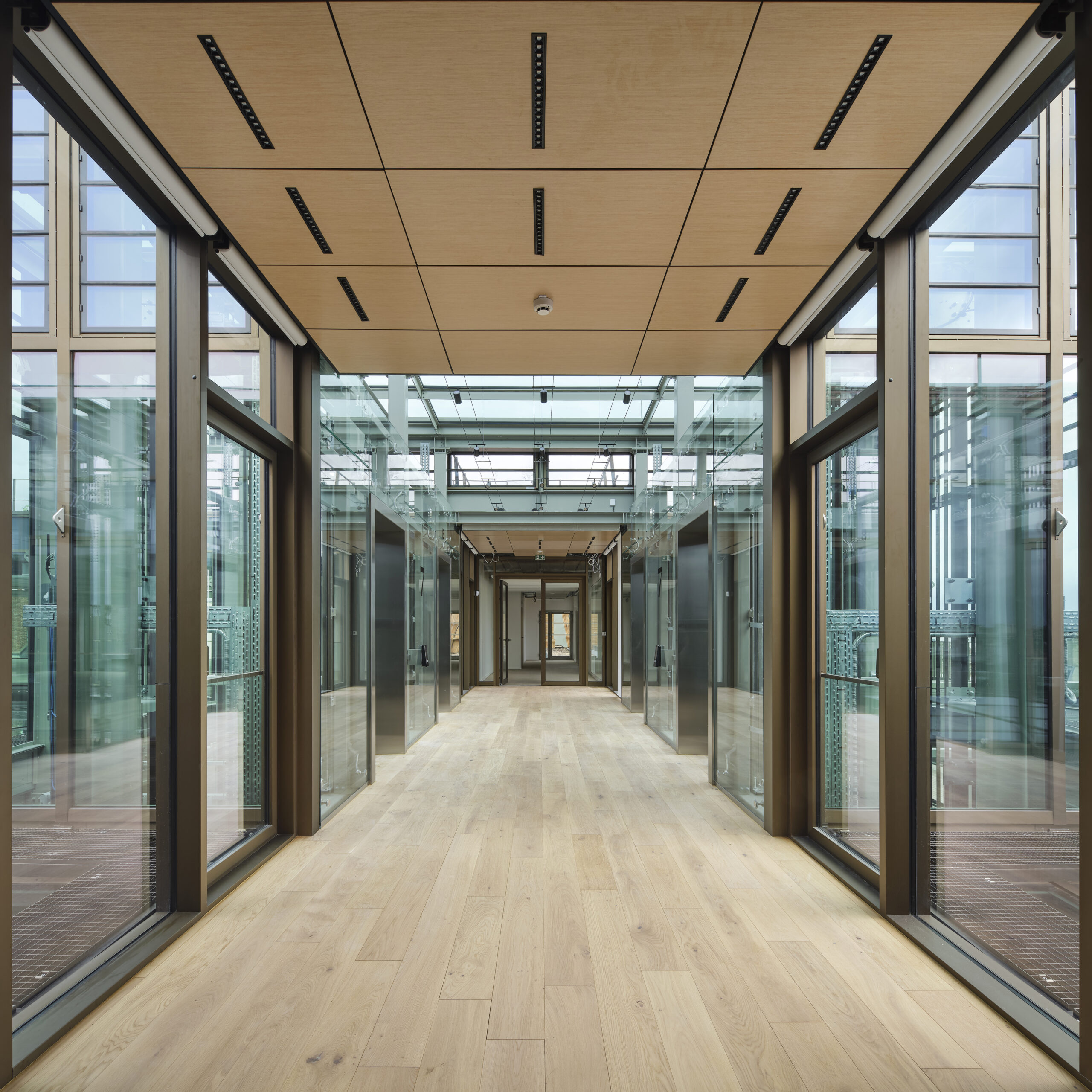
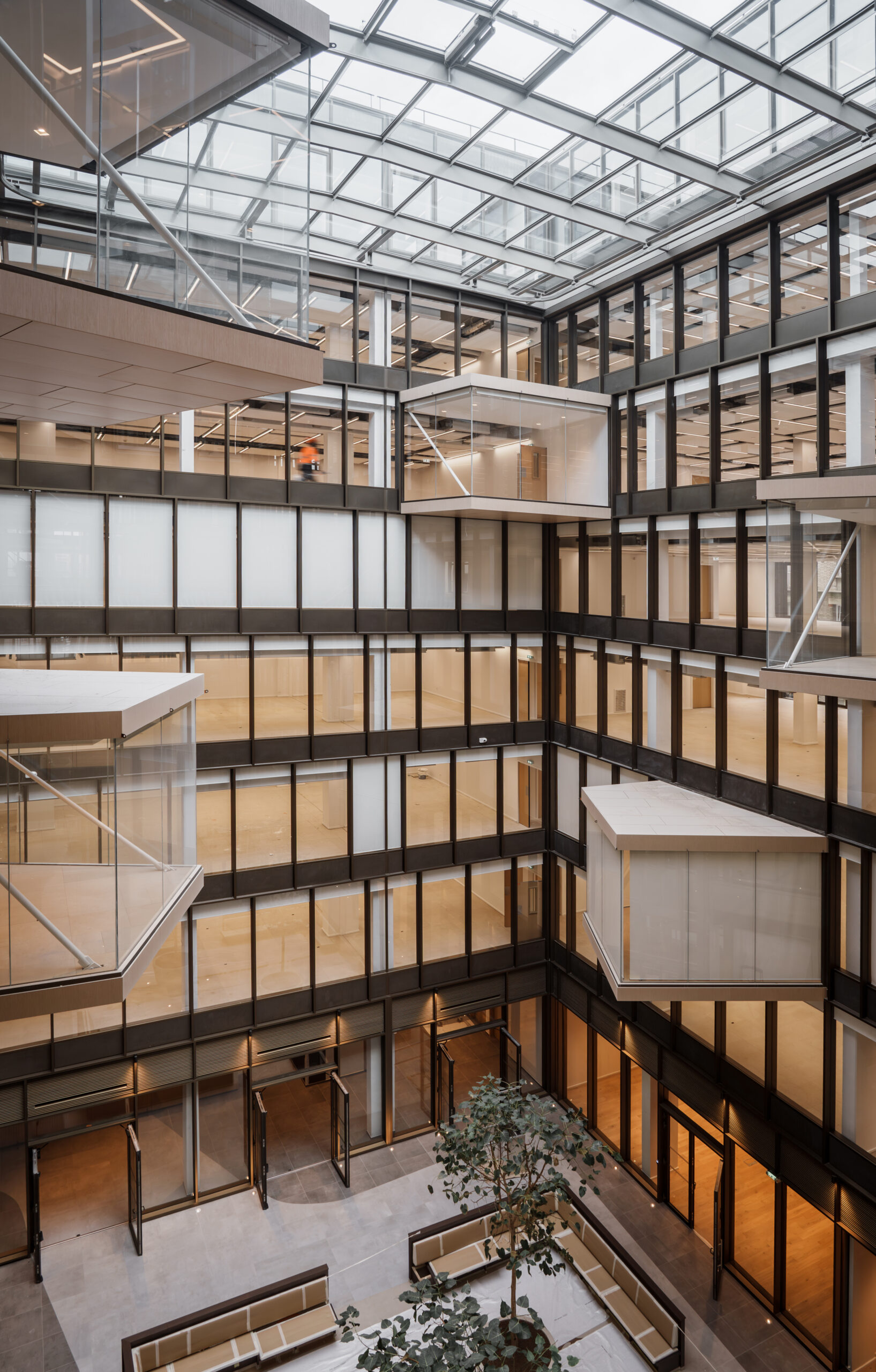
Subsequently, an atrium is created which, like an island of light fed by the overhead opening, becomes the radiant reflector of this space, now capable of bringing its interior spaces back to life. Within this luminous island, places for meeting and sharing (terrace platforms) settle onto walkways like bird nests on branches. These branch like walkways connect the different zones of a given floor on either side of the atrium. They offer multiple perspectives conducive to well-being, ensure functional connections between the different floors, allowing them to find their autonomy while remaining connected to a whole. Evoking waterfalls, panoramic glass elevators cross the atrium and ensure vertical movement. The atrium façades appear to glow in resonance from the interior to the exterior, asserting the building’s new identity to the city.
Nature is reborn in the city
Being able to contribute to the greening of a neighborhood and to the preservation of biodiversity in the city, and thereby offer a sense of nature to the site’s occupants, is a theme that is particularly close to our hearts.
To address these challenges, we have worked simultaneously along several lines.
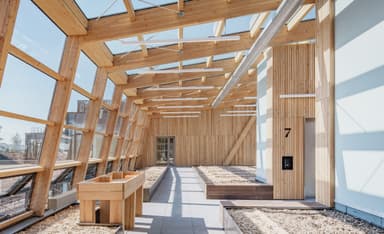
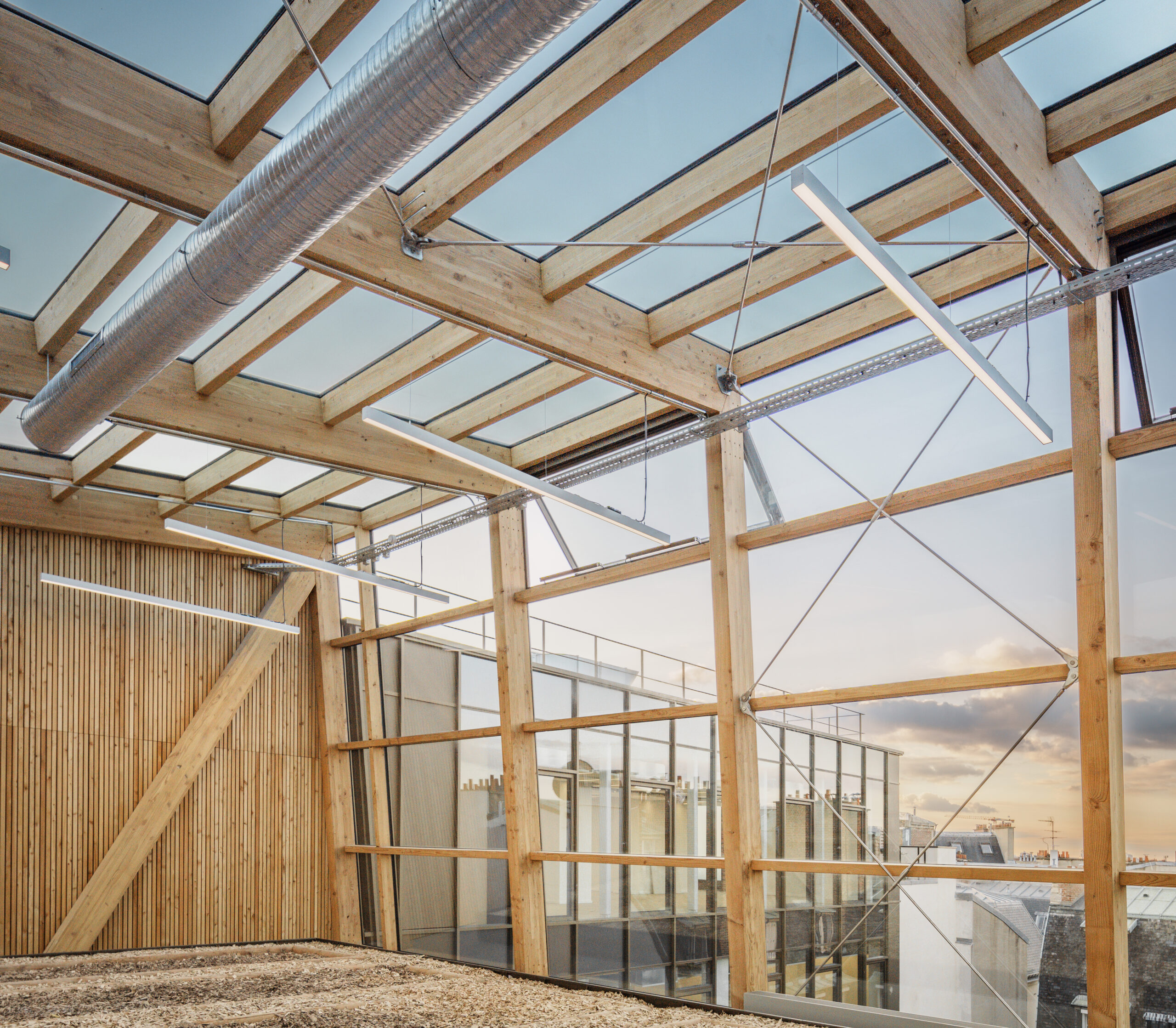
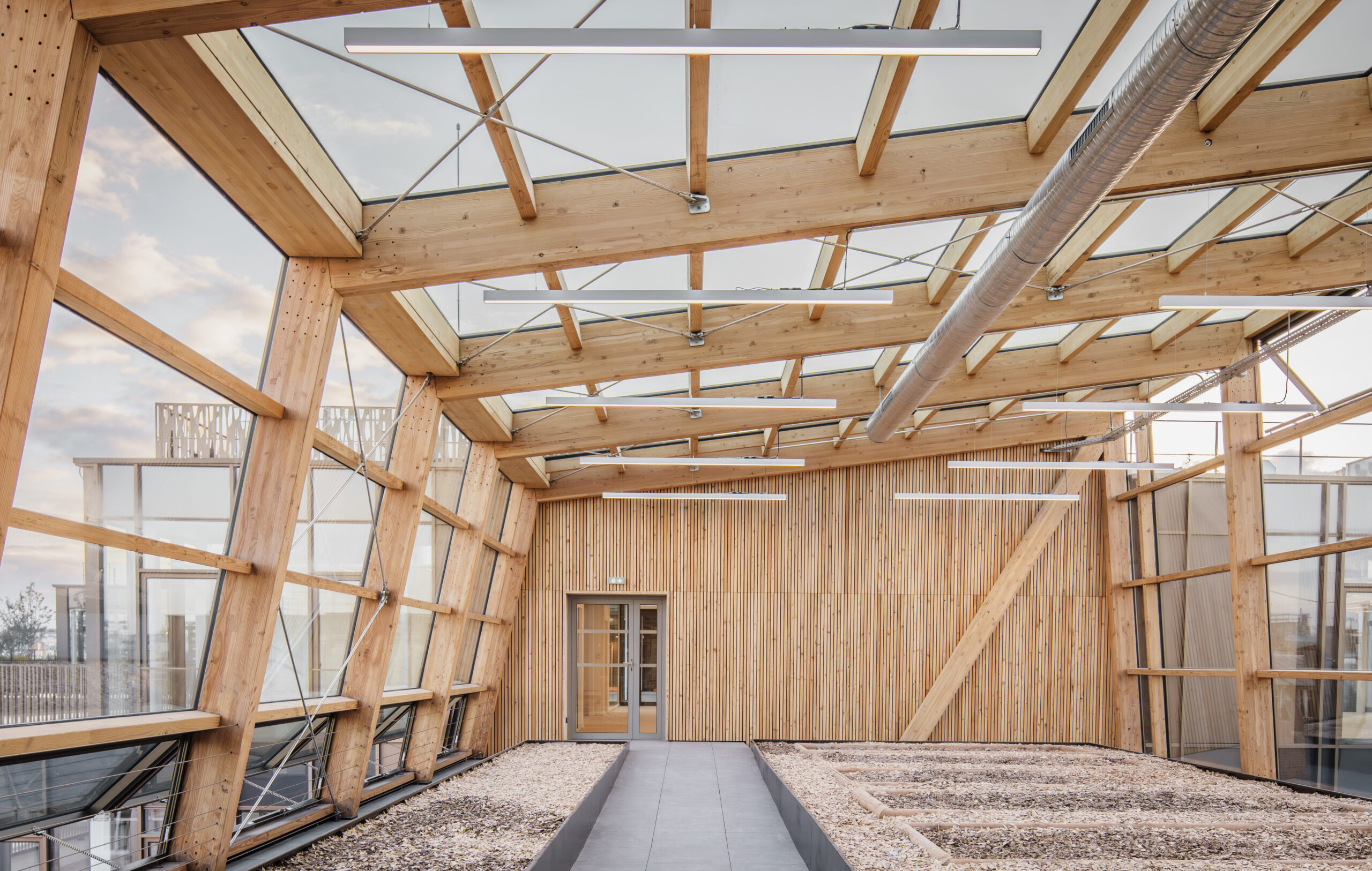
- Developing a landscaped promenade from level S-1 to the R+7 terraces through contrasting atmospheres, from shaded ground level gardens to sunlit terraces.
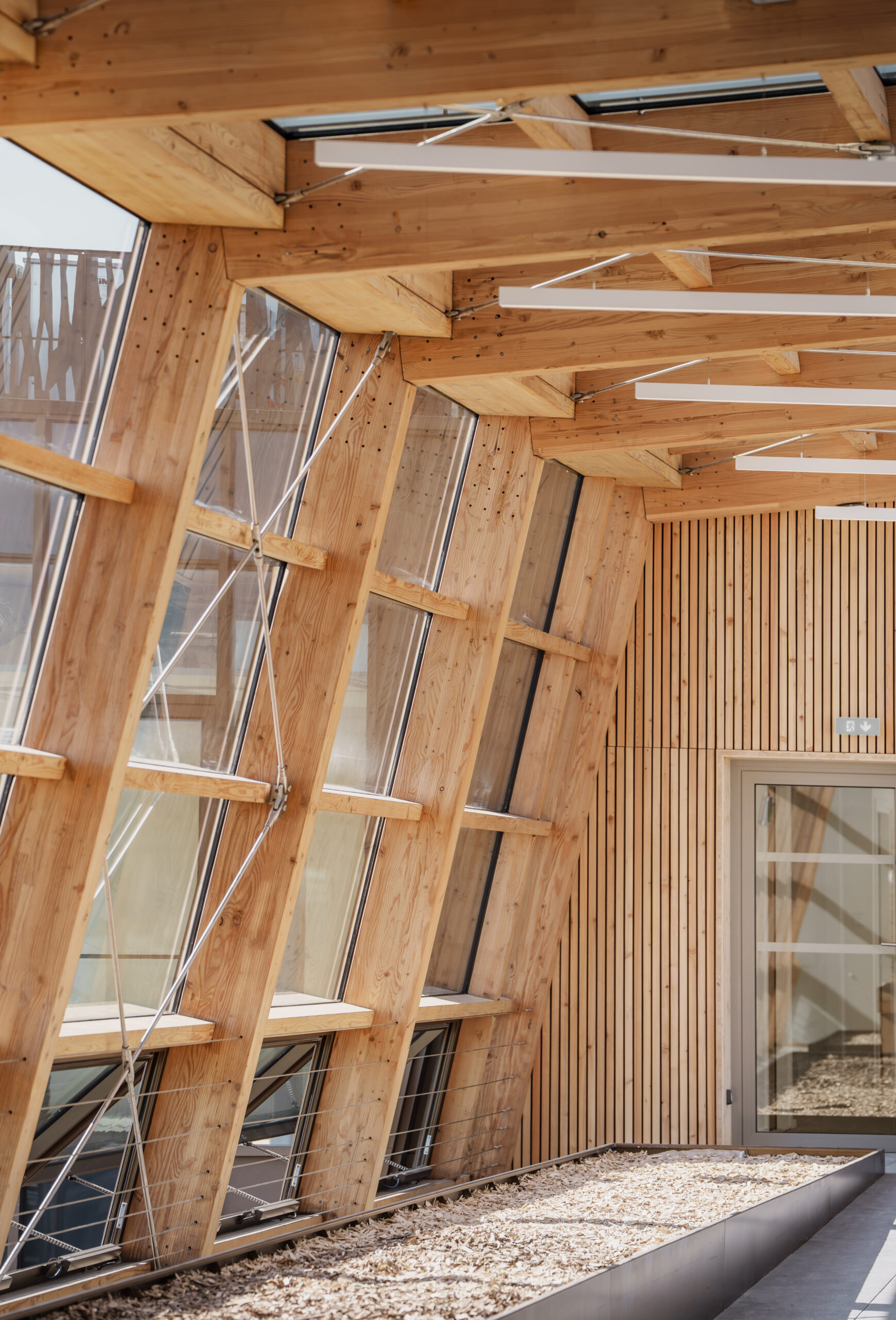
- Providing planted spaces that foster well-being by engaging all five senses. Wild and edible plants are introduced to promote biodiversity and invite users to make the landscape their own, with particular attention paid to the selection of fragrant species.
- Offering a participatory landscape through a wide range of uses for these spaces: relaxation, co-working, solarium, small events, contemplation of a landscaped scene or of the view over Paris, tasting, workshops, activities and more.
- Raising awareness of urban agriculture through convivial, participatory cultivated areas.
- Making extensive use of native species with the aim of preserving biodiversity, as well as for demonstration and educational purposes.
The inspirations are multiple, ranging from the undergrowth of the Île-de-France woodlands for the ground level patios to sunlit meadows for the terraces.

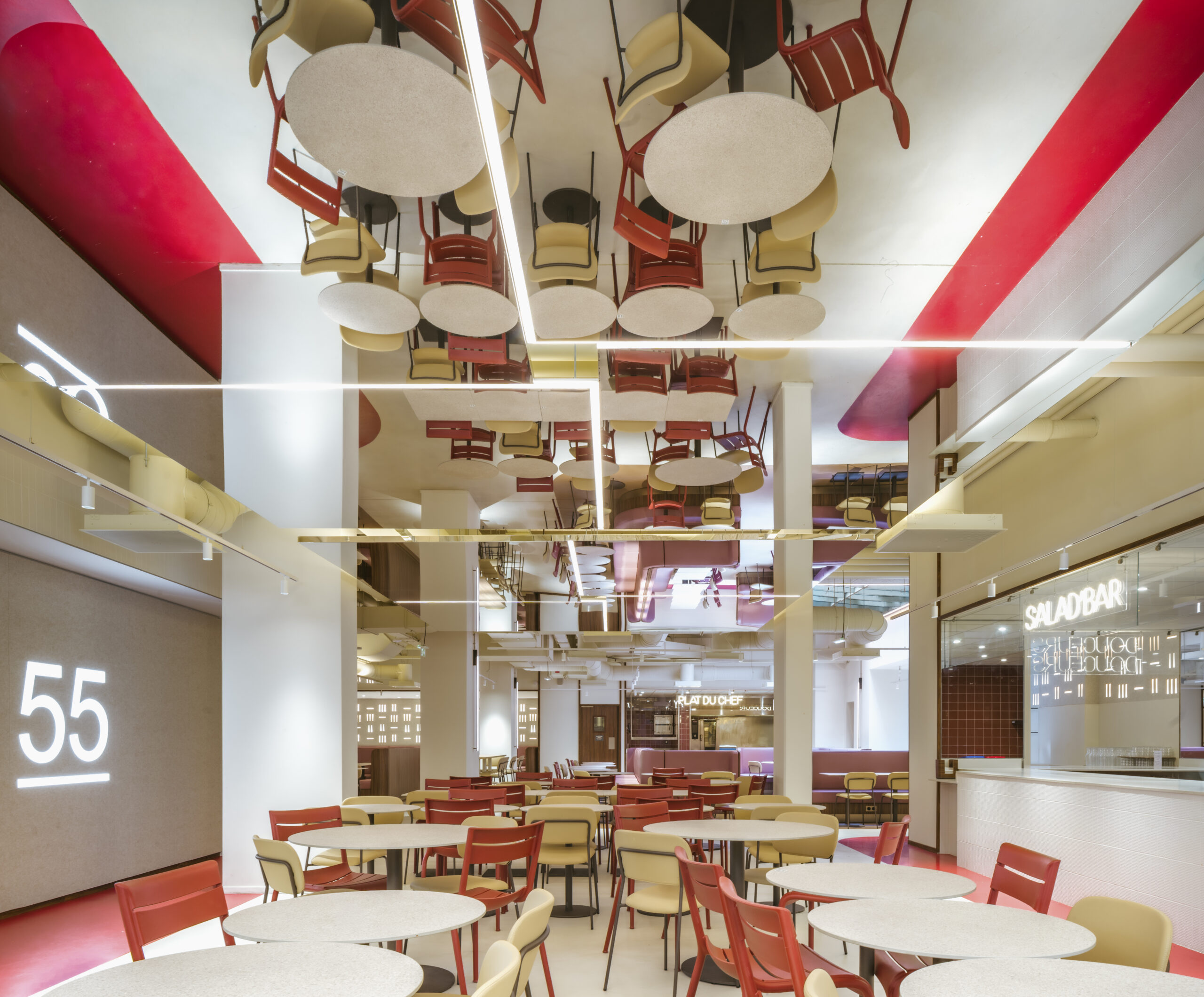
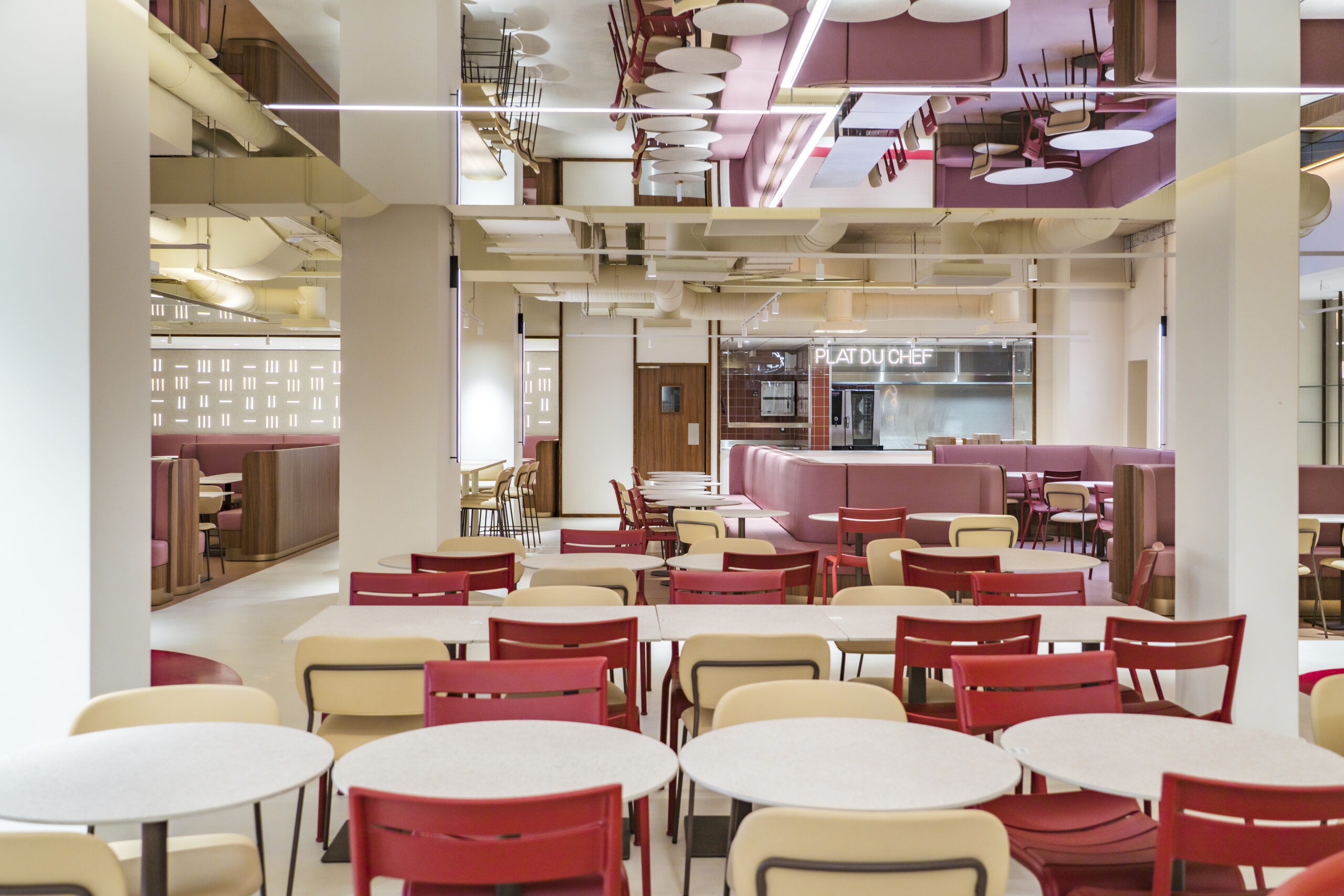
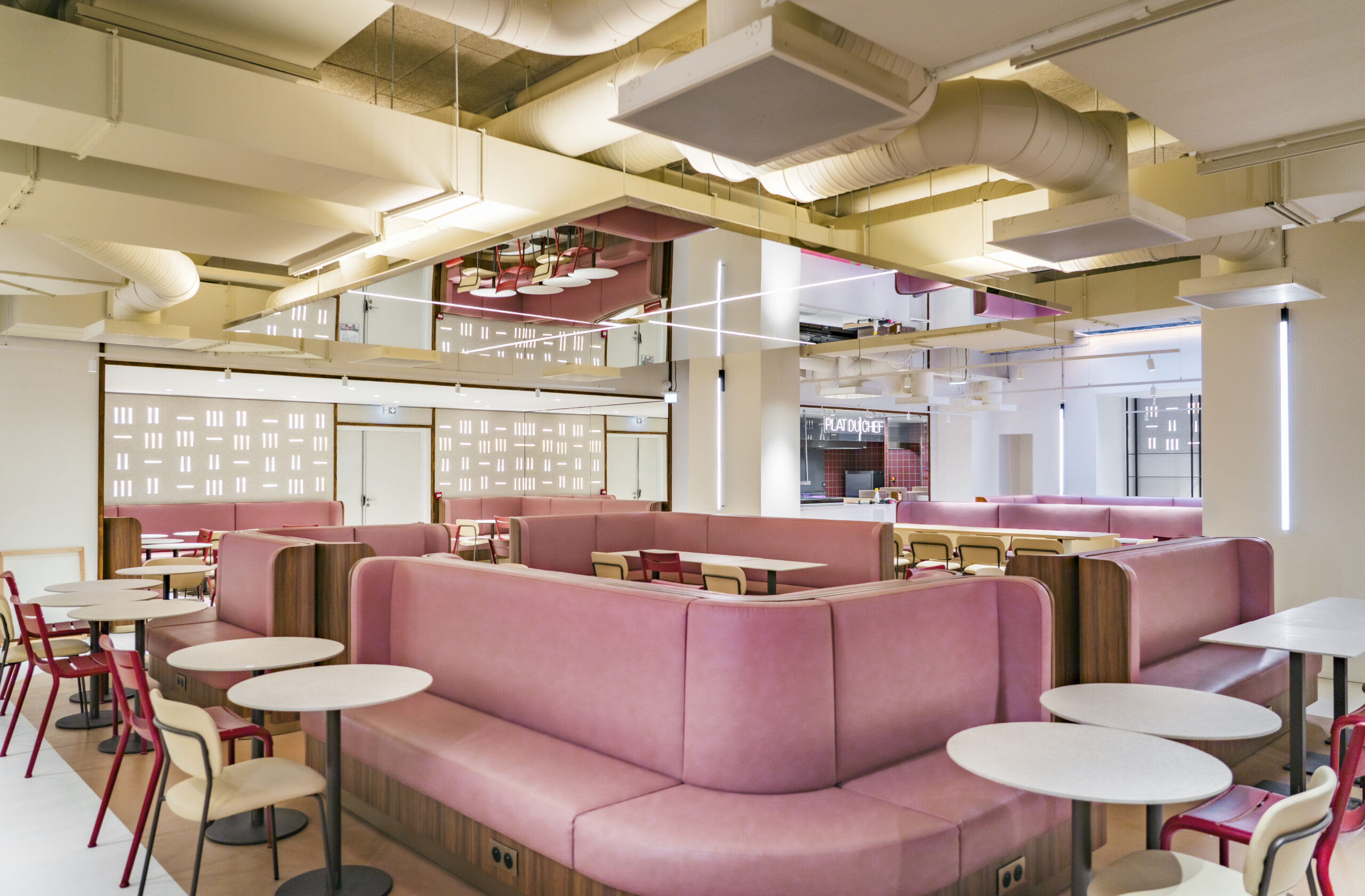
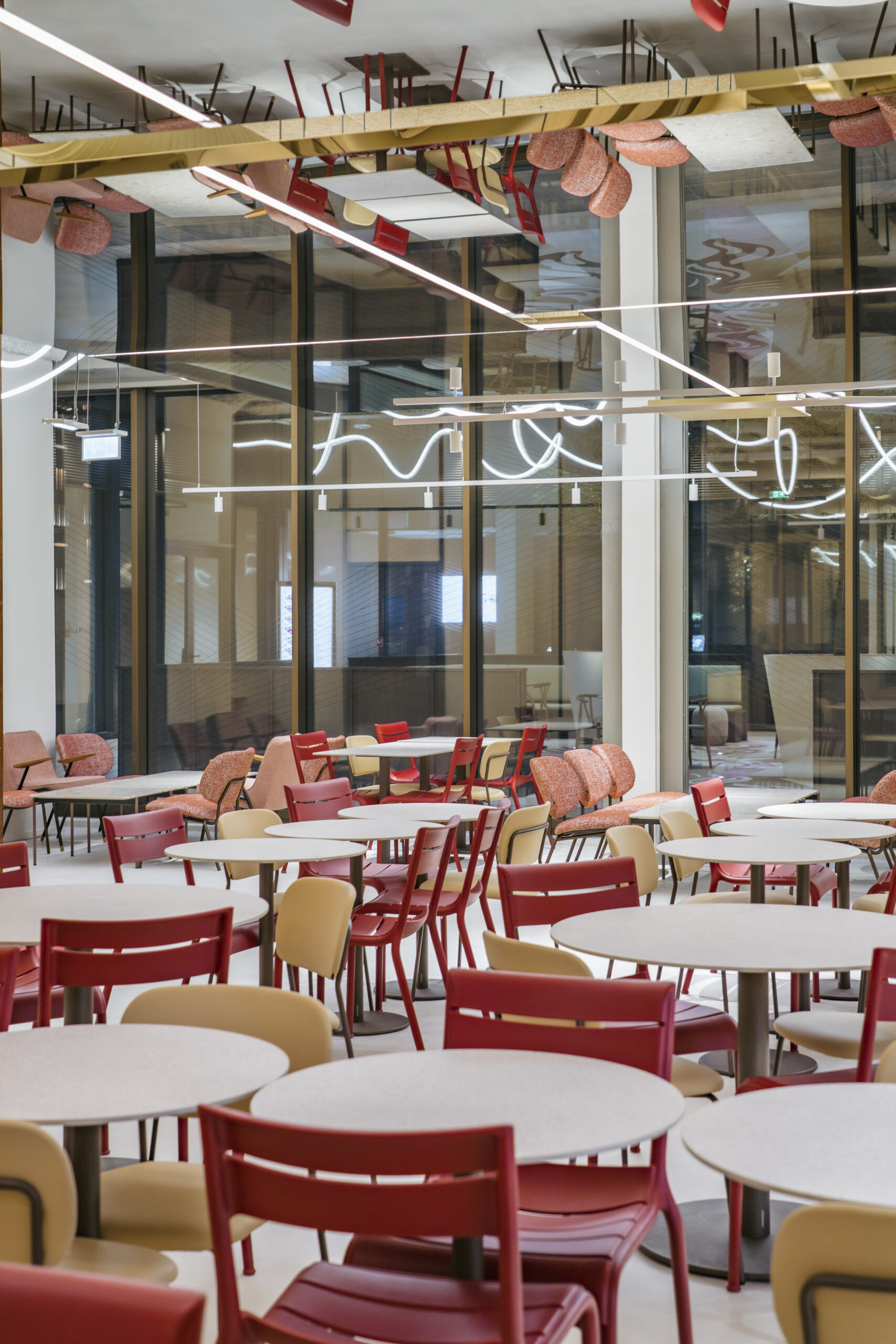
Food court Mondo
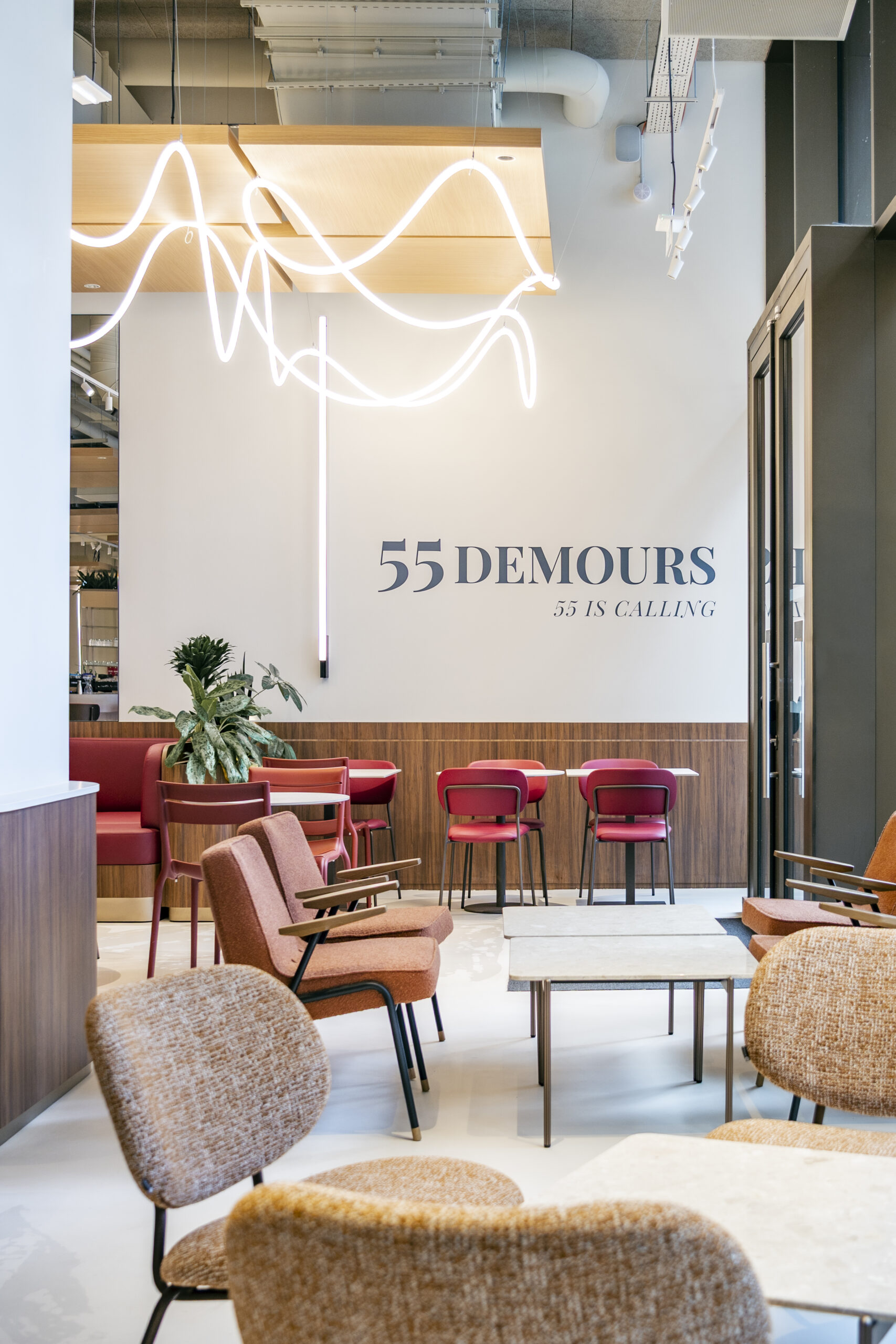
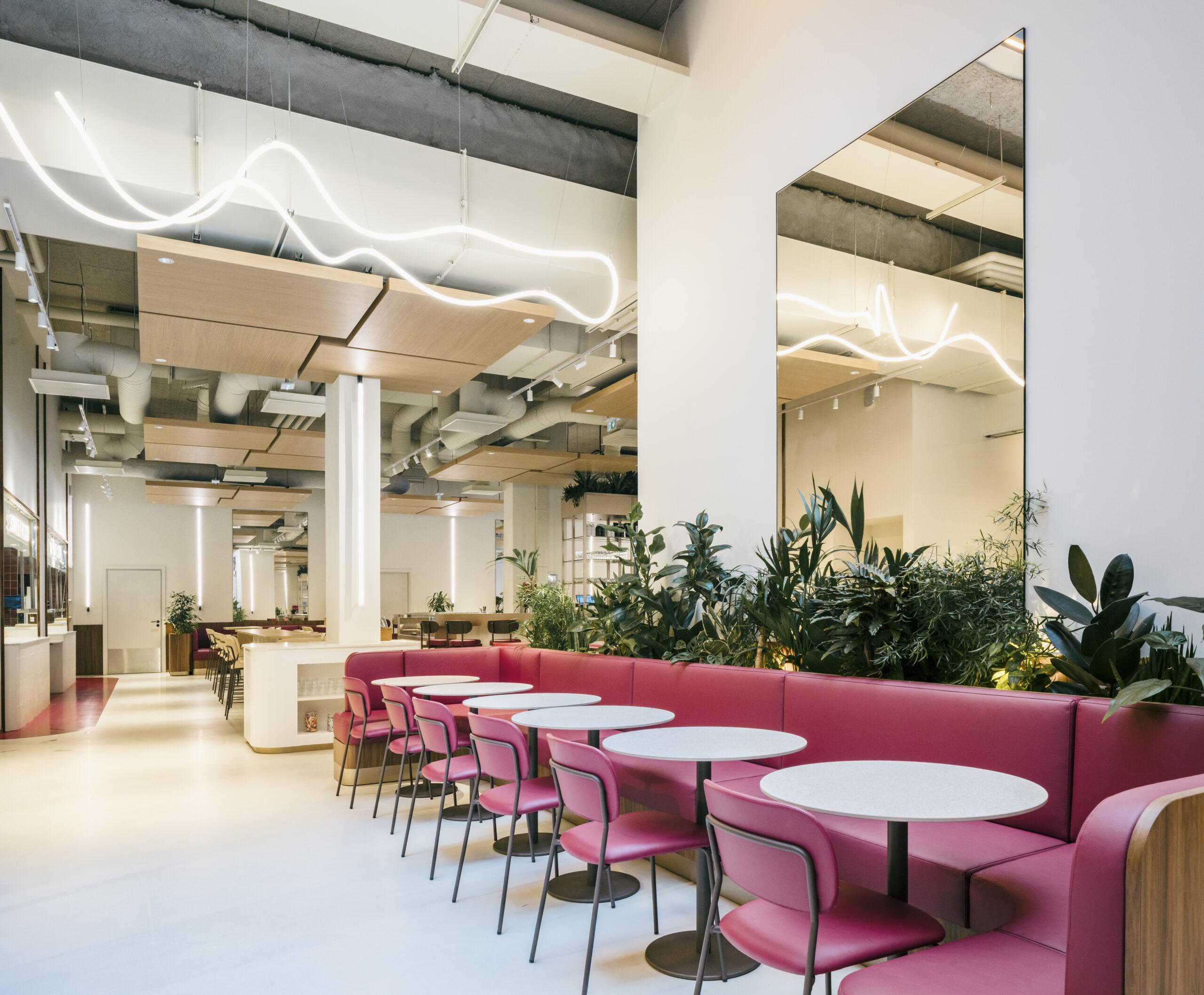
A flexible, immersive and biophilic space.
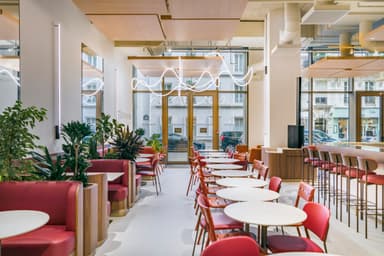
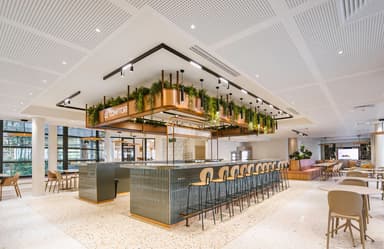
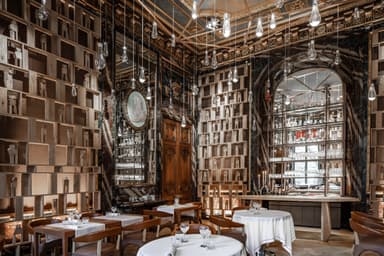
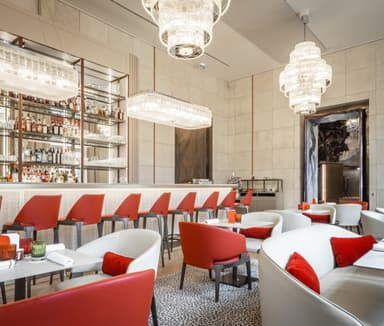
The Mondo food court offers 460 seats spread over two levels. Conceived as a platform of taste, it combines conviviality, flexibility and durability. Designed to adapt to different moments of the day, this flexible space offers a varied and engaging culinary experience, while incorporating biophilic architecture and noble materials. More than a place to eat, it is a vibrant social hub where gastronomy and the art of living meet in visual and sensory harmony.
Discover also
See all our projectsSee all our projects